
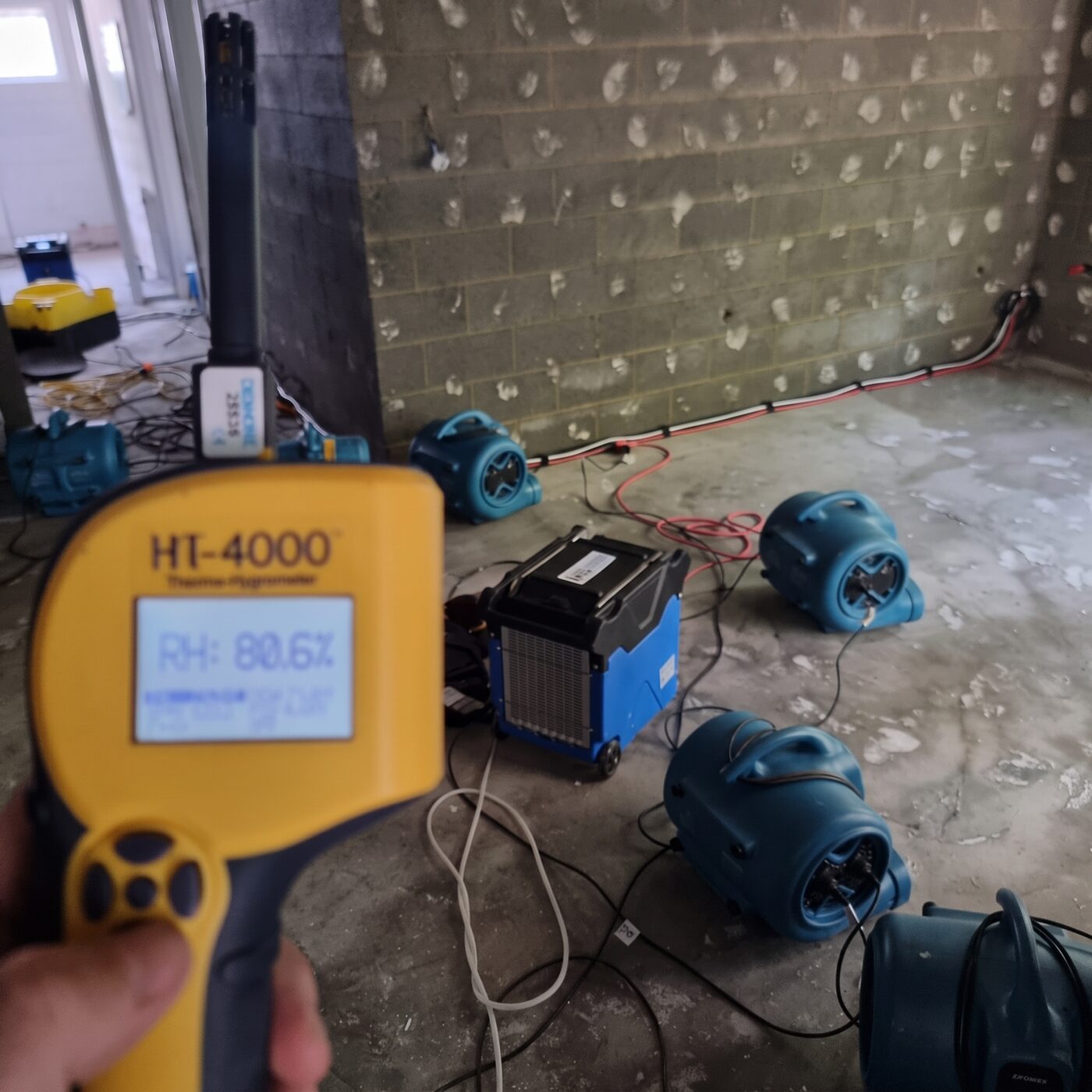
Successful mould remediation on the Sunshine Coast needs a moisture plan as well as a cleaning plan. A room can be treated carefully and still develop new growth if a roof leak, damp cavity or condensation problem remains. Coastal air and hinterland rainfall add context, but neither is a complete diagnosis. This guide follows the moisture side of remediation: how the source is investigated, how structural drying differs from opening windows and what owners should monitor after the job. It complements an individual assessment rather than replacing one.
Separate water entry from condensation
Water entry may come from roofing, plumbing, waterproofing or storm damage. Condensation occurs when moisture in the air meets a sufficiently cool surface. Both can contribute to mould, but they require different responses. A ceiling in Buderim affected after rainfall needs investigation of the roof and water pathway; a repeatedly damp bathroom in a coastal unit may also require attention to extraction and surface conditions.
Gather observations before the visit. Does the patch grow after rain? Does the room smell damp only when it has been closed? Is there a plumbing fixture nearby? Has an air-conditioning drain overflowed? These details help guide the inspection without proving the cause. Several sources can coexist, so do not stop investigating simply because one visible defect has been repaired.
Moisture mapping makes the scope more useful
Moisture mapping records readings across affected and reference areas to help understand the spread of dampness. Different materials and instruments need appropriate interpretation. A single elevated reading is not a laboratory identification of mould, and a dry measurement at one point does not describe an entire wall. The assessor combines readings, visual inspection, history and access conditions to decide whether more investigation is needed.
Thermal imaging can highlight temperature patterns that warrant checking, but it does not see mould through plasterboard. In a Montville home, shaded walls, air movement and building construction can affect the image. Ask the assessor to explain what a finding means and what remains unconfirmed. That distinction helps avoid spending money on treatment that does not match the actual moisture pathway.
Source repair and remediation must be coordinated
The remediation scope should identify known source repairs and who will carry them out. Roofing, plumbing and waterproofing work may require separate qualified trades. Contamination control and make-safe work may still be needed while repairs are arranged, but the longer-term plan should not ignore ongoing water entry. Record dependencies so the drying contractor and reinstatement builder know what must happen before the next stage.
When mould affects cavities, access may be required to remove damaged linings or wet insulation and assess framing. Some materials may be cleaned; others may need removal. Do not assume that spraying a cavity resolves its condition. The work needs a defined boundary, an appropriate cleaning or removal method and a clear record of what was accessible and treated.
Structural drying is a measured process
Professional drying uses equipment and repeated measurements to reduce moisture in affected building materials. Dehumidifiers and air movers are selected and adjusted for the conditions, with readings used to track progress. The Sunshine Coast's outdoor humidity means opening windows is not always the most effective way to dry a structure. The appropriate approach depends on weather, material condition and the drying plan, not the postcode alone.
Ask what the drying target is based on and how completion will be documented. Suitable dry references and material-specific readings are more informative than whether the wall feels dry to touch. Drying duration can change if hidden wet materials are discovered or water entry continues. Avoid reinstalling plasterboard, skirting or flooring before the agreed drying and remediation requirements have been met.
Manage the property after handover
After remediation, maintenance recommendations should match the cause. That might include checking roof repairs after rain, improving bathroom extraction, servicing an air-conditioning condensate system or reviewing drainage. Keep records and photographs of previously affected areas. In a closed holiday property around Noosa or Coolum, regular inspections can reveal dampness before it becomes extensive, but no inspection schedule eliminates every risk of a future incident.
The Mould Removers provides a full documented report at the end of every job, including relevant photos, moisture readings and work completed. Independent hygienist involvement can be coordinated where the project requires separate assessment or verification. For Sunshine Coast mould remediation and moisture management, request a quote with your suburb, incident history and affected rooms, or call 0418 344 573 to discuss the next step.
Frequently asked questions
Will drying remove existing mould?
Drying addresses moisture but does not physically remove established contamination. Cleaning or removal may also be needed. A complete remediation plan considers both the material condition and the source supporting growth.
Should windows stay open while drying equipment runs?
Follow the drying team's instructions for the specific setup. Uncontrolled humid air entering the work area may reduce drying efficiency. The recommended arrangement depends on equipment, weather and building conditions.
Further reading & official guidance
General advice is not a property assessment, medical advice or legal advice. The official resources below inform the cleaning, moisture and tenancy guidance; descriptions of our services come from The Mould Removers.