
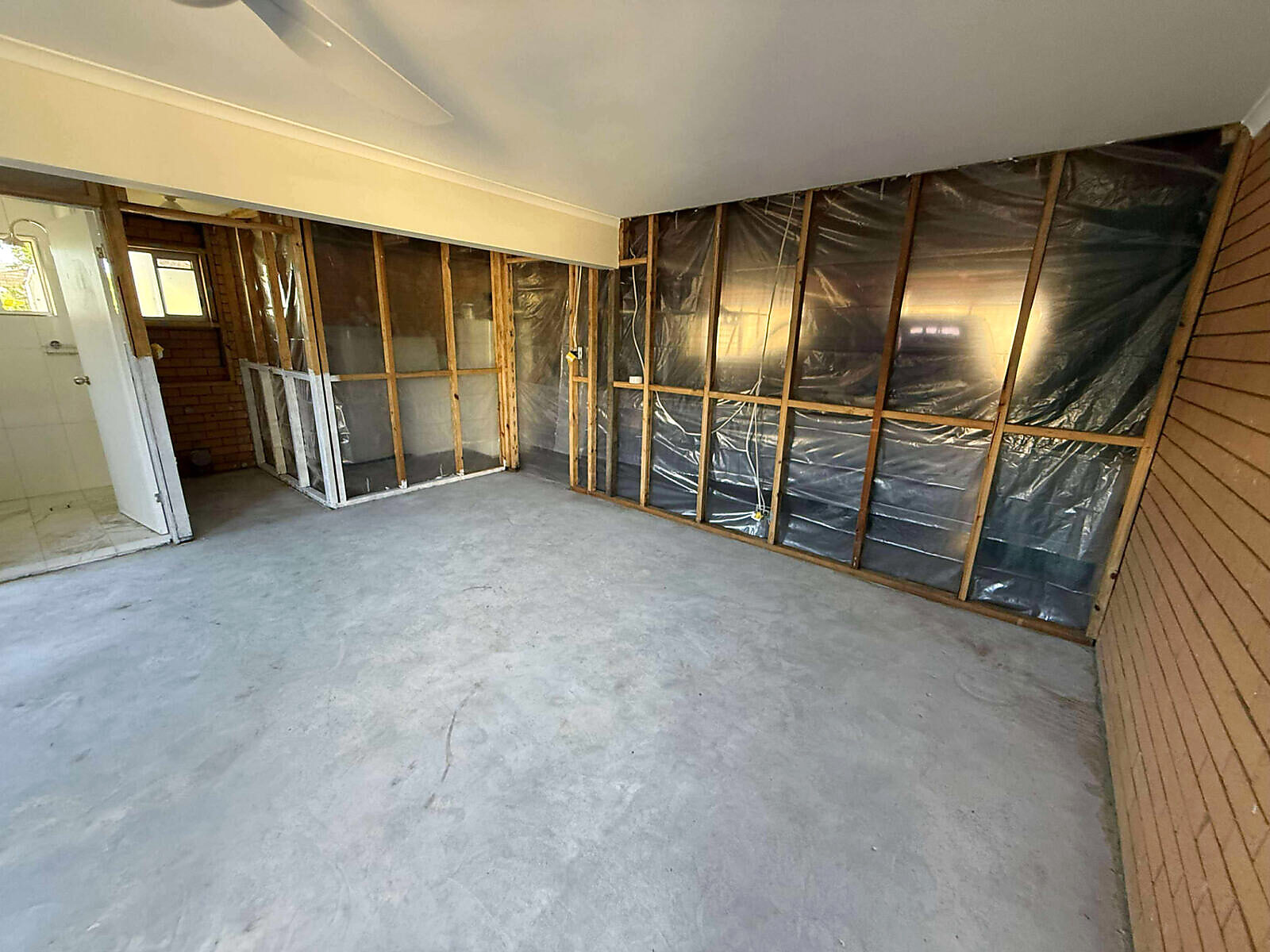
Mould remediation is a managed response to contamination and moisture, not simply a way to improve the appearance of a wall. For Brisbane owners and insurance builders, that distinction matters when damage extends into plasterboard, insulation or framing. A surface can look cleaner without the underlying problem being resolved. This article explains the decisions behind professional remediation, what a useful scope should contain and how documentation supports a responsible handover. It is particularly relevant when a leak has affected concealed materials or repairs are about to begin.
Removal, cleaning and remediation are not identical
Cleaning is one tool within remediation. It may be appropriate for some accessible materials, but it cannot by itself establish whether a cavity is affected or whether a leak has stopped. Remediation considers the source of moisture, the extent of growth and the condition of materials before selecting cleaning, removal and drying methods. A cosmetic stain treatment should not be mistaken for evidence that the building problem has been addressed.
For example, a damaged wall in an Indooroopilly home may have mould on the back of the lining following a plumbing leak. Wiping the room-facing surface will not provide access to that area. In another property, growth on an accessible, sound surface may not justify removing the wall. The purpose of assessment is to distinguish these scenarios and avoid both unnecessary demolition and an inadequate surface-only response.
A scope starts with evidence and limitations
A useful assessment records visible damage, relevant moisture readings and the history of the incident. Thermal imaging can help identify areas for further investigation, but temperature differences need interpretation and do not prove mould is present. The scope should identify what was inspected, where access was limited and what further work may be needed to confirm concealed conditions. Uncertainty should be recorded rather than hidden behind a broad promise.
Ask how the affected area will be defined and what would trigger a scope variation. Opening a wall may reveal more damage than the initial inspection could see. Agree on the process for photographs, notification and approval before additional work proceeds. For insurance jobs, the builder or insurer may have specific documentation and approval requirements; provide those early so the remediation scope fits the wider repair process.
Containment protects the work boundary
Removing contaminated materials can disturb dust and fungal material. Depending on the job, the remediation plan may include isolation of the work area, controlled access, HEPA-filtered equipment and negative-air containment. These measures are selected for the conditions and task; a simple patch and a large concealed loss do not necessarily require identical arrangements. Ask how the team will separate the work from occupied or unaffected areas.
The work boundary also affects contents, waste routes and other trades. Moving furniture through an active work zone or starting plastering before remediation is finished can complicate control and documentation. Agree who can enter, how waste will be removed and when the builder receives access. Containment is a practical part of doing the work responsibly, not a decorative sign that automatically guarantees a particular outcome.
Material decisions and drying before rebuilding
Porous materials such as badly affected plasterboard or insulation may require removal because contamination is not limited to an accessible surface. Other materials may be retained and cleaned where their condition and accessibility allow it. The decision should account for contamination, deterioration and the planned reinstatement. Antimicrobial products can support a treatment process, but coating contaminated material is not an alternative to an appropriate cleaning or removal decision.
After source repair and remediation, structural drying may be needed before new linings are installed. Dry-looking timber is not the same as measured dry timber. The team can compare readings with suitable dry references and document progress. In Brisbane's humid conditions, equipment selection and monitoring should respond to actual materials and measurements, rather than assuming a fixed number of days is sufficient for every property.
Reporting and independent verification
The Mould Removers is IICRC certified and provides a full documented report at the end of each job. The report records completed work and relevant photos and moisture readings. Independent occupational hygienists can be involved in assessment, scope development or post-remediation verification where appropriate. Their role is distinct from the contractor's completion documentation. A verification result applies to the assessed conditions and scope; it is not a permanent guarantee for the whole property.
Before accepting a quote, ask what reporting is included, whether independent testing is proposed and who commissions it. Also confirm whether leak repair, contents restoration and rebuilding are separate. If you need mould remediation in Brisbane, send The Mould Removers the property location, incident history and photographs, or call 0418 344 573 to discuss an assessment and documented scope.
Frequently asked questions
Is a hygienist report included in every remediation job?
No. Every job receives the contractor's documented completion report. Independent hygienist assessment or verification is a separate service whose need and scope should be discussed before work, particularly where an insurer or builder requires it.
Can the room be replastered as soon as mould is removed?
Reinstatement should follow the agreed remediation, drying and any verification requirements. The schedule depends on the materials and findings. Covering an unresolved leak or wet framing can conceal rather than resolve the building problem.
Further reading & official guidance
General advice is not a property assessment, medical advice or legal advice. The official resources below inform the cleaning, moisture and tenancy guidance; descriptions of our services come from The Mould Removers.