
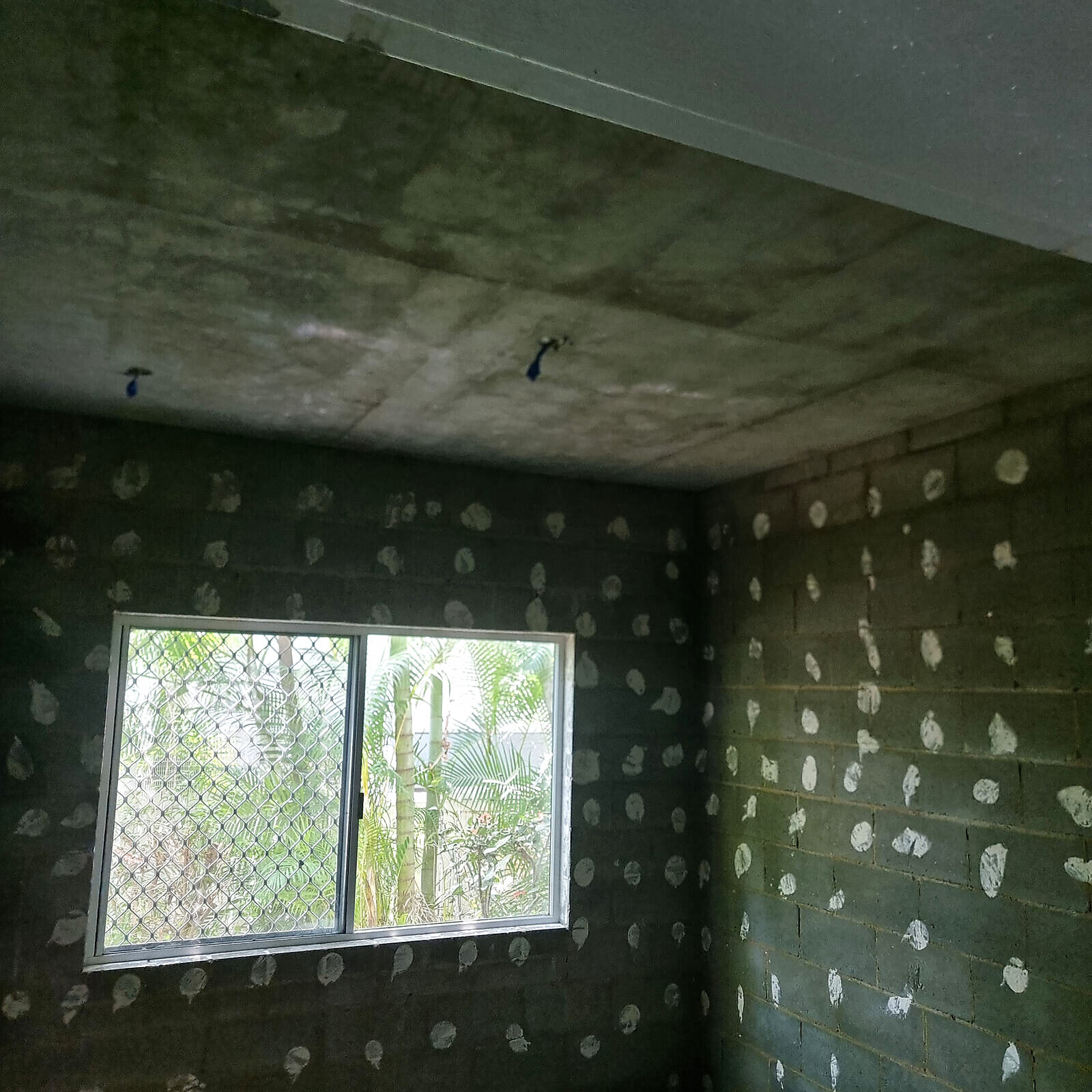
Bathroom mould is often treated as a cleaning issue, yet recurring spots on ceilings, walls or silicone can point to several different moisture problems. Steam, ineffective extraction, a concealed leak and failed wet-area waterproofing do not all need the same response. For Brisbane and Sunshine Coast homeowners, this guide explains how to separate routine moisture management from damage that warrants professional assessment. Start by observing the pattern and the building condition rather than assuming that every bathroom needs a strip-out or that every dark patch can be solved with spray.
Condensation and extraction are the first checks
A bathroom generates moisture during showers and bathing. If humid air is not effectively removed, it can condense on cooler ceilings and walls. Check that the exhaust fan operates and that its grille is not obstructed by dust. A running fan is not proof of adequate extraction: airflow, duct condition, discharge location and replacement air all influence performance. Have unsuitable or faulty systems assessed by an appropriate trade.
Opening a window may help under suitable conditions, but outdoor humidity and the room's layout matter. In a compact coastal unit at Mooloolaba, a poorly performing fan may remain a problem even with the window ajar. In a Brisbane house, an enclosed bathroom may need a different solution. Ask for ventilation recommendations matched to the space rather than relying on a universal timer or one-size-fits-all fan setting.
Ceiling mould can have more than one source
Scattered ceiling growth may be associated with condensation, while staining after rainfall can warrant a roof investigation. Exhaust systems that discharge inadequately may also affect the roof space. None of these patterns proves a cause without inspection. Note whether the ceiling becomes damp during showers, after storms or even when the bathroom is unused. That history helps the assessor decide which areas to investigate.
If plasterboard is sagging, soft or extensively damaged, do not scrape it or cut into it yourself. Keep clear of unstable materials and obtain suitable assistance. A remediation plan may require access to the back of the ceiling, insulation or framing. Painting over the room-facing surface does not reveal whether those materials are affected and may conceal signs that would otherwise help the investigation.
Walls, silicone and hidden wet-area damage
Growth on grout or silicone is not by itself proof of failed waterproofing. However, repeated dampness outside the shower, swollen skirting, loose finishes or a musty smell in the adjoining room should prompt closer investigation. Water can move behind tiles and into nearby linings. A plumbing or waterproofing specialist may be needed alongside the remediation assessor to establish and repair the source.
Do not replace silicone and assume a concealed problem has been resolved without checking the wider conditions. Conversely, do not agree to demolish an entire bathroom solely on the basis of a small surface patch. A documented assessment should explain which observations support the proposed work and where access is limited. Intrusive investigation may be justified, but its purpose and likely consequences should be clear before it begins.
Cleaning versus professional remediation
Limited growth on an accessible, sound, washable surface may be managed differently from affected porous linings. Follow authoritative cleaning advice and product instructions, and never mix chemicals. Extensive or recurring contamination, water-damaged plasterboard and hidden cavities warrant a professional assessment. Dry brushing or sanding mouldy surfaces to prepare for painting can disturb contamination and is not an appropriate shortcut.
Professional bathroom mould removal may include containment, HEPA cleaning, controlled removal of affected materials and structural drying, depending on the findings. Antimicrobial treatment may be part of the scope but does not replace source repair or physical removal where required. Ask whether the quote includes leak repairs, ventilation upgrades and reinstatement, or whether those will be coordinated separately with qualified trades.
A practical prevention and handover plan
After treatment, monitor the bathroom and adjoining rooms for recurrence. Keep extraction equipment maintained, manage visible condensation and have outstanding leaks or waterproofing defects repaired. Do not assume a mould-resistant paint will compensate for ongoing dampness. The right prevention plan depends on the original cause, material condition and how the bathroom is used; no treatment guarantees that new growth cannot occur after future moisture problems.
The Mould Removers provides a full documented report at the end of every job, recording work completed and relevant photographs and moisture readings. Independent hygienist involvement can be coordinated where needed. For bathroom mould removal in Brisbane or the Sunshine Coast, provide your suburb, affected surfaces and history of recurrence through the quote form, or call 0418 344 573 to discuss assessment and a suitable scope.
Frequently asked questions
Will a new exhaust fan solve the problem?
It may help if ineffective extraction is part of the cause, but it will not repair a leak or remove established contamination. Assess the moisture source and damaged materials before assuming a fan replacement is the complete solution.
Does mouldy silicone mean the bathroom must be demolished?
Not necessarily. Surface condition alone does not establish concealed damage. Further assessment is more important when there are leaks, deterioration, damp adjoining rooms or repeated growth despite appropriate maintenance.
Further reading & official guidance
General advice is not a property assessment, medical advice or legal advice. The official resources below inform the cleaning, moisture and tenancy guidance; descriptions of our services come from The Mould Removers.