
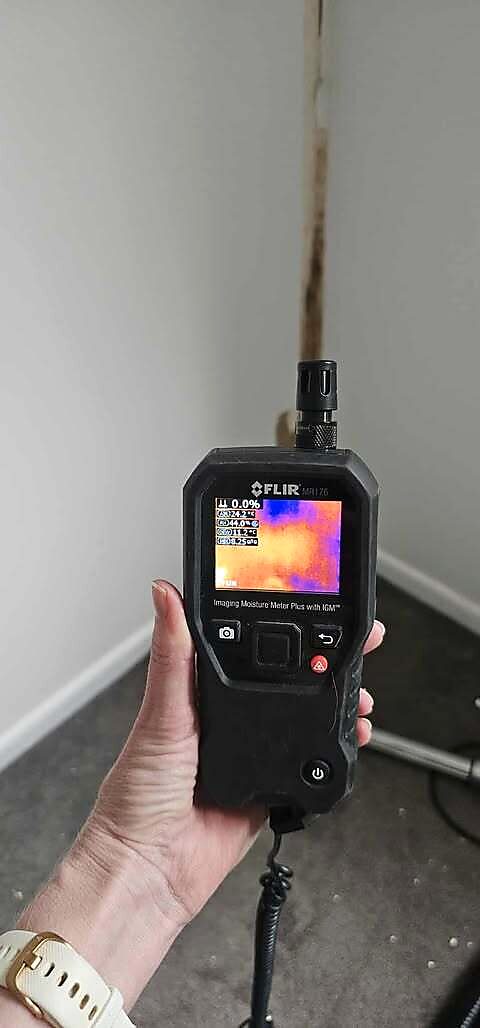
A mould inspection should answer a practical question: what is affected, what moisture conditions are relevant and what needs to happen next? It should not be a collection of unexplained readings or a promise to detect every hidden patch. Brisbane and Sunshine Coast owners may request assessment after a leak, before repairs or because a smell persists without obvious growth. This guide explains how to prepare, what common inspection methods can establish and when independent occupational hygienist involvement may be useful for a more specific assessment or verification purpose.
Define the reason for the inspection
Tell the assessor whether your concern is recurring bathroom growth, storm damage, a concealed leak, a tenancy issue or an insurance repair. Each situation may need different access and documentation. A pre-purchase concern is also different from checking a defined work area after remediation. Be clear about the decision you need to make so the proposed inspection is relevant rather than a broad service with unclear limits.
Prepare a brief timeline, photographs and records of known repairs. Include the address, affected rooms, whether the building is occupied and who controls access. In a Chermside unit or a Maroochydore commercial property, a manager or body corporate may need to coordinate entry. Ask before the visit whether cupboards, roof spaces or subfloors should be accessible, and do not disturb suspect materials to create access yourself.
Visual assessment and moisture history
Visual inspection can document staining, growth, material deterioration and possible water pathways in accessible areas. The assessor also considers incident history and room use. A visible patch does not necessarily show the full extent, while an absence of visible growth does not rule out concealed damage. Good reporting distinguishes what was observed from what is suspected and explains why further investigation may be recommended.
Location helps place the findings in context. Brisbane subfloors, Sunshine Coast roof spaces and enclosed coastal apartments may present different moisture conditions, but climate alone does not diagnose a building. An inspection should consider repairable defects, condensation and access limitations. Ask for a clear account of the areas inspected and any spaces that could not be checked, rather than expecting an unlimited whole-building guarantee.
Moisture mapping and thermal imaging
Moisture readings help assess affected materials and compare them with suitable reference areas. Instruments have limitations and need material-specific interpretation. Electrical conductivity, surface condition and construction can influence some measurements. A reading needs explanation in context; it is not a species identification or a standalone measure of health risk. Repeated measurements may also help track drying after the source is addressed.
Thermal imaging highlights temperature differences. Those patterns may guide further checking for moisture, but the camera does not directly see mould through plasterboard. Air movement, insulation and sunlight can also influence images. Ask how thermal observations were checked against the building and moisture readings. A professional assessment should avoid presenting a colourful image as definitive evidence of contamination in an inaccessible cavity.
When independent hygienist testing may help
An independent occupational hygienist can assess conditions, recommend sampling where appropriate and develop or review a remediation protocol. Air or surface samples should serve a defined purpose, with results interpreted alongside site findings. Testing is not automatically necessary for every visible patch, nor can a single sample establish all conditions throughout a building. Ask what question the test answers and whether it could change the work.
For complex insurance losses, sensitive situations or a specified post-remediation process, independent involvement may be valuable. The hygienist's assessment is separate from the remediator's own report. Confirm who appoints the hygienist, what access is required and whether laboratory costs and verification visits are included in the quote. Medical concerns remain a matter for a health professional rather than a building contractor or laboratory result alone.
Turn findings into a clear next step
A useful outcome explains source repair, proposed remediation, drying needs and remaining uncertainties. It should identify whether other qualified trades are needed and whether intrusive investigation would clarify hidden damage. For insurance work, ask about approval and documentation requirements before the scope progresses. For rentals, give the findings to the appropriate owner or manager without treating the inspection as a legal ruling on responsibility.
The Mould Removers offers inspections, moisture mapping and thermal imaging, with independent hygienist coordination where required. Every completed remediation job receives a full documented report including relevant photos and readings. To request an inspection in Brisbane or the Sunshine Coast, submit the property details and reason for assessment through the quote form or call 0418 344 573.
Frequently asked questions
Do I need air testing before every mould removal job?
Not necessarily. The need depends on the purpose of the assessment and the project requirements. An independent hygienist can advise whether sampling would provide useful information beyond visual inspection and moisture investigation.
Can an inspection guarantee no hidden mould exists?
No. Findings apply to the methods used and areas accessible at the time. Concealed spaces may require further investigation. Ask for limitations to be recorded and for recommendations that explain how remaining uncertainty can be addressed.
Further reading & official guidance
General advice is not a property assessment, medical advice or legal advice. The official resources below inform the cleaning, moisture and tenancy guidance; descriptions of our services come from The Mould Removers.