
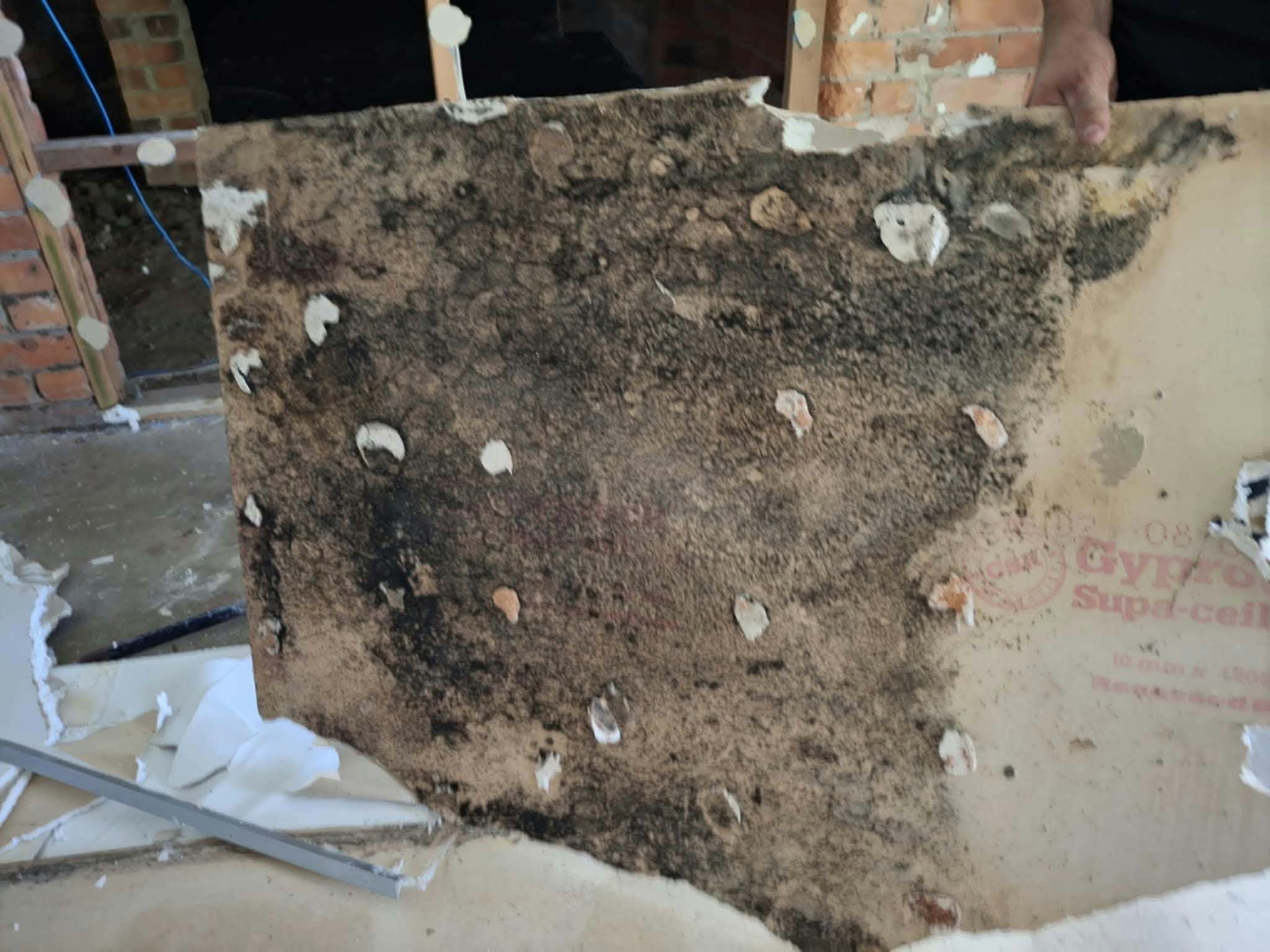
A wall can conceal moisture damage without displaying a large patch of visible mould. Persistent musty odours, swollen skirting and a known leak may justify investigation, but none proves what is behind the lining. For Brisbane and Sunshine Coast property owners, the challenge is to gather useful evidence without opening walls unnecessarily or disturbing potentially affected materials. This guide explains the clues, the limits of non-invasive inspections and how controlled access can fit into a professional mould remediation plan when hidden damage is suspected.
Clues that warrant a closer look
A recurring musty smell, lifting paint, soft plasterboard, swollen joinery or stains near skirting may be associated with damp materials. A room adjoining a leaking shower or a wall below a plumbing incident deserves attention even if its front face looks clean. These signs can have other causes, so treat them as reasons to inspect rather than confirmation of hidden mould. Record when and where you notice the problem.
Moisture history is especially valuable. Was there a burst pipe, storm event or repeated waterproofing repair? Did the smell begin after flooring or cabinetry was installed? In a renovated Brisbane Queenslander or a Sunshine Coast unit, new finishes may hide earlier damage. Provide any photographs or repair invoices you already have, but do not assume that a previous repair proves every affected material was dried or treated.
What instruments can and cannot tell you
Moisture meters help assess dampness in suitable materials, while thermal imaging highlights temperature differences that may warrant checking. Interpretation depends on the instrument, substrate and site conditions. Neither tool directly identifies fungal species or provides a complete picture through an intact wall. An elevated reading may guide further investigation; it should not be presented as a laboratory result or an automatic instruction to remove the whole lining.
A non-invasive inspection may leave important areas unconfirmed, particularly behind cabinetry, tiled walls or insulated cavities. Ask the assessor to identify those limitations in writing. A useful report separates observed findings from suspected conditions and recommended next steps. This helps an owner, builder or insurer decide whether controlled access is justified and what information that access is expected to provide.
Plan intrusive investigation before opening walls
Controlled access may be needed when evidence suggests concealed damage. Before cutting, consider building services, material hazards and the effect on occupied areas. Older materials may need hazardous-material assessment, and hidden electrical or plumbing services require care. Do not drill inspection holes or pull off mouldy skirting yourself as a shortcut. A professional plan should explain access, contamination control and how the opening will be managed afterwards.
Agree how findings will be documented and who authorises a wider strip-out if more contamination appears. For rentals or strata premises, access permissions and responsibilities may involve the owner, property manager or body corporate. In insurance work, approval rules can affect timing and evidence collection. Clarify these matters before demolition, while allowing appropriate urgent make-safe action where a separate safety hazard exists.
Hidden materials need a material-specific scope
Opening a cavity may reveal affected insulation, plasterboard backing, framing or the underside of cabinetry. The treatment decision depends on contamination, deterioration and whether surfaces can be accessed and cleaned. Some porous materials may require removal; suitable framing may be retained and cleaned within the agreed scope. Do not assume that a spray applied into an inaccessible space provides equivalent treatment to physically accessing and removing contamination.
The water source also needs investigation. A cavity below a shower may need plumbing or waterproofing work; a wall near a roof leak may require a roofer; a subfloor issue may involve drainage or ventilation advice. Drying should be documented before the wall is closed. Coordinating these trades avoids covering wet or untreated areas with new plasterboard merely because the room needs to look finished.
Handover should describe the actual work boundary
The completion report should distinguish the accessed and treated areas from any remaining limitations. The Mould Removers provides a full documented report at the end of each job, recording relevant photographs, moisture readings and work completed. Independent occupational hygienist involvement can be coordinated where the project needs separate assessment or verification. No report should be read as proof that every inaccessible cavity throughout the property is permanently free of mould.
If you suspect mould behind walls in Brisbane or the Sunshine Coast, send the property suburb, the affected room and the history of water damage or odour. Photographs of visible changes are useful, even when no mould can be seen. Call The Mould Removers on 0418 344 573 or request a quote to discuss an inspection and a staged, evidence-based scope.
Frequently asked questions
Can a thermal camera see mould inside a wall?
No. It shows temperature patterns, which may help identify areas for further moisture investigation. Visual access, material assessment and sometimes specialist testing are needed to answer different questions about hidden conditions.
Does a musty smell mean all plasterboard needs replacing?
No. An odour warrants investigation but does not establish the location or extent of contamination. A staged assessment can help define the affected area and avoid both unnecessary removal and inadequate treatment.
Further reading & official guidance
General advice is not a property assessment, medical advice or legal advice. The official resources below inform the cleaning, moisture and tenancy guidance; descriptions of our services come from The Mould Removers.