
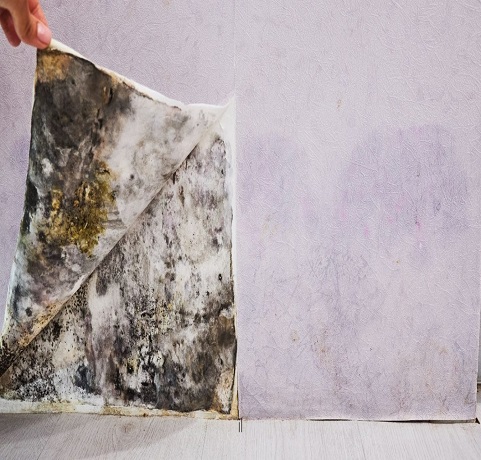
Dark spots on a ceiling or wall often lead owners to search for black mould removal. The important first point is that colour alone does not identify the fungal species, establish a health risk or determine the treatment. The practical priority is to investigate moisture and the condition of the affected materials. This guide helps Brisbane and Sunshine Coast property owners respond without alarming labels, unsupported health claims or a surface-only fix. If you have symptoms or particular health concerns, speak with a health professional rather than relying on photographs or online descriptions.
What the label black mould does and does not mean
Many types of fungal growth can appear dark, and appearance varies with the surface, lighting and age of the growth. A photograph cannot reliably identify a species. Nor can it tell whether contamination extends behind a lining. Describing a patch as black is useful for locating it, but using that description as a diagnosis can distract from the moisture investigation and material assessment that inform the work.
Testing is not automatically required simply because mould is dark. Where identification or a more detailed assessment would answer a project-specific question, an independent occupational hygienist may recommend sampling and interpretation. Ask what question the proposed test will answer and how the result could change the scope. A laboratory result is one part of an assessment, not a replacement for investigating the building.
Look for the moisture pattern, not just the colour
Dark growth around a bathroom exhaust outlet may suggest persistent condensation or ineffective extraction. A patch below a roof penetration may warrant a leak investigation. Growth behind a wardrobe may reflect a cool, damp surface with limited airflow. These are starting points rather than conclusions. In Brisbane and the Sunshine Coast, rainfall and humidity can contribute, but a local climate explanation should not excuse a repairable plumbing or roof fault.
Record where the mould is, whether it is spreading and when you first noticed it. Include recent storms, leaks, renovations or prolonged vacancy in your notes. Avoid assuming that a patch is harmless because it is small or severe because it is black. Its extent, material condition, moisture source and accessibility matter when deciding whether professional assessment is warranted.
Avoid disturbing hidden or damaged materials
Do not dry-brush, sand or scrape mouldy plasterboard as a quick preparation for repainting. Disturbing affected materials can spread dust and fungal material. A soft wall, sagging ceiling or musty cavity needs more care than a washable surface. If water is near electrics or a ceiling looks unstable, keep clear and seek suitable urgent assistance before considering cleaning. Mould work does not resolve structural or electrical hazards.
For limited surface cleaning, follow authoritative guidance and product instructions, and do not mix cleaning chemicals. This article is not a recipe for treating extensive contamination. If growth returns, covers multiple areas or follows a substantial water event, obtain an assessment rather than repeating stronger treatments. Repeated staining after painting is a sign to review the cause and scope, not simply apply another coat.
How professional removal decisions are made
Professional assessment considers whether contamination is accessible and whether materials can be retained. Badly affected porous materials may require removal under appropriate controls; suitable retained surfaces may be cleaned using the agreed process. The team may use containment, HEPA filtration and controlled waste handling according to the work. The objective is a defined remediation outcome, not a promise that the building will contain no fungal particles whatsoever.
The moisture source must also be addressed. Drying, leak repair and ventilation improvements may involve several trades and separate costs. Ask for the scope to identify those responsibilities clearly. A treatment that changes the colour of a stain does not by itself show that contamination has been removed or that a concealed leak has been repaired. Documentation should describe actual work and findings.
Reports, independent advice and your next step
The Mould Removers is IICRC certified and provides a full documented report at the end of every job, with relevant photos and moisture readings. Independent hygienist assessment or post-remediation verification can be coordinated where appropriate. These reports serve different roles. Neither a contractor report nor a sampling result is a universal medical clearance or a permanent guarantee against future mould after another moisture event.
To arrange an assessment, send photographs, the property suburb and a short history of leaks or recurrence. Mention any insurance builder, property manager or body corporate involved. The Mould Removers supports Brisbane and Sunshine Coast owners with inspections, mould remediation and drying. Call 0418 344 573 or use the quote form to discuss the observed problem without needing to identify the mould yourself.
Frequently asked questions
Is all black mould the same species?
No. Colour is not a reliable species identification. A qualified assessor may recommend sampling when it serves a specific purpose, but the practical investigation still needs to address moisture, extent and affected materials.
Can you tell whether mould caused my symptoms?
No. The remediation team assesses building conditions, not medical causation. Discuss symptoms and individual health concerns with a health professional, particularly before deciding what arrangements are appropriate during the work.
Further reading & official guidance
General advice is not a property assessment, medical advice or legal advice. The official resources below inform the cleaning, moisture and tenancy guidance; descriptions of our services come from The Mould Removers.