

Local mould remediation · Maudsland
Professional Mould Removal Maudsland
Providing IICRC-certified mould remediation, building moisture investigations, and complete water damage restoration for family residences, acreage estates, and growing residential communities across Maudsland and the Coomera River basin.
- QBCC Licence 15082064
- IICRC industry methods
- Homes, units & commercial
- Documented report every job
Photo: John Robert McPherson, CC BY-SA 4.0
Mould Remediation & Moisture Investigations in Maudsland
Maudsland has grown rapidly into a thriving residential enclave bordered by Guanaba and the foothills of the Gold Coast hinterland. According to the 2021 Census, the suburb recorded 8,073 residents and 2,443 private dwellings, dominated by standalone houses with townhouses comprising just 2.4% and apartments only 0.1%. Nestled along the Coomera River corridor, newer master-planned estates and sprawling acreage properties encounter persistent subtropical humidity, heavy valley condensation, and run-off that can elevate indoor moisture levels.
The Mould Removers provides targeted residential mould remediation, commercial moisture assessments, and body corporate services across Maudsland. Modern airtight building envelopes often trap indoor humidity generated by daily living, ducted air conditioning, or undetected roof and plumbing leaks. Our QBCC-licensed technicians employ calibrated diagnostic tools to locate underlying moisture sources, safely eliminate microbial contamination, and supply a detailed written report with moisture readings and preventive recommendations for every completed project.
Book a Mould Inspection
Common signs of mould
- Musty odours circulating through ducted reverse-cycle air conditioning systems
- Visible fungal spotting on ceilings near cornice lines and downlights
- Discolouration or staining along timber skirting boards and drywall bases
- Condensation pooling on window glass in valley-facing rooms during winter
- Mould blooms developing inside walk-in robes, shoe racks, and linen presses
- Peeling paint or swelling timber finishes following heavy hinterland storm downpours
Our Mould Remediation Services in Maudsland
 Illustrative image
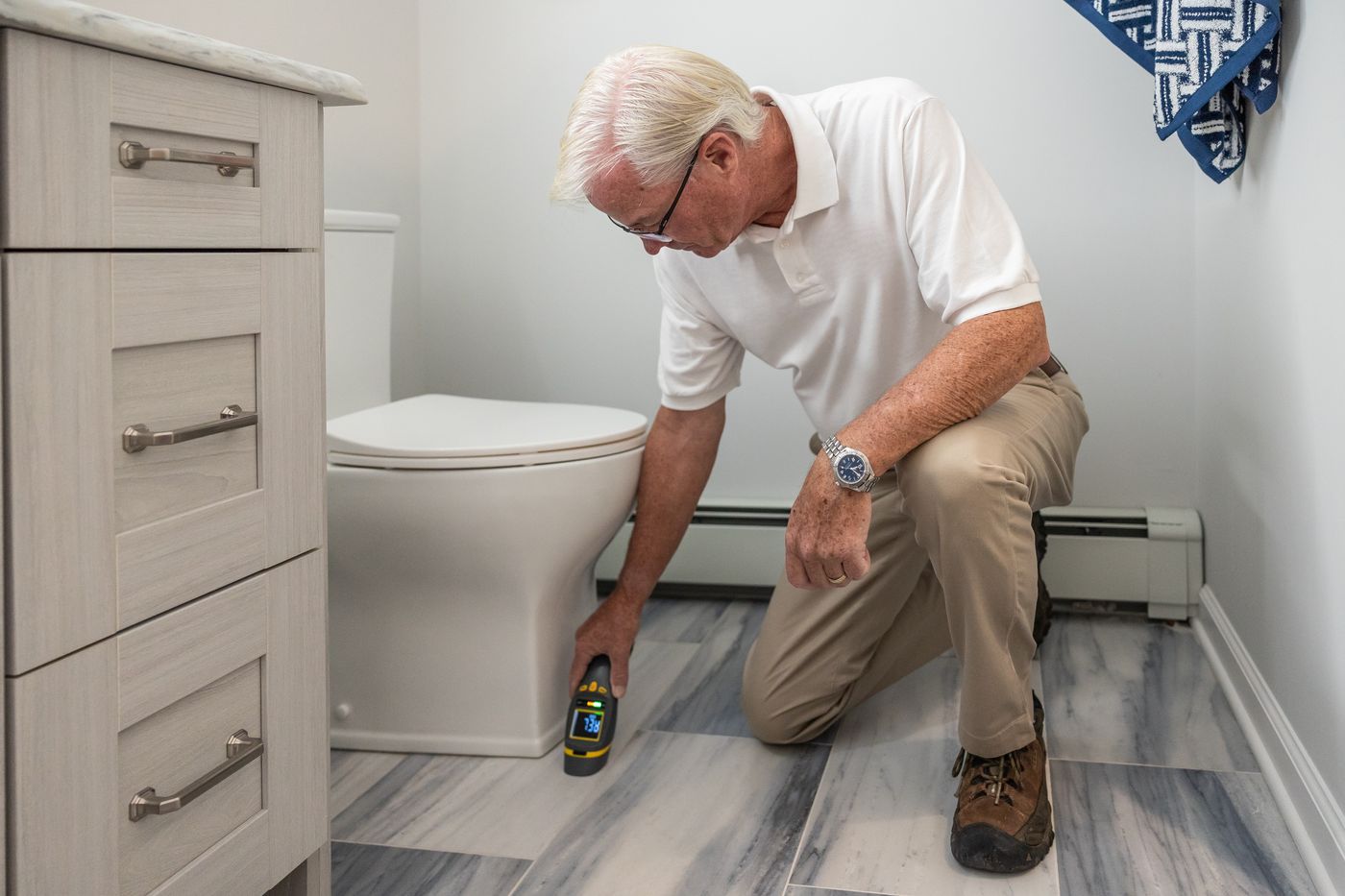
Mould Inspections & Moisture Investigations
Visual assessment, moisture readings and thermal imaging to find the water behind mould in Maudsland homes, units and commercial premises. Sampling, where needed, is arranged with an independent hygienist.
Learn more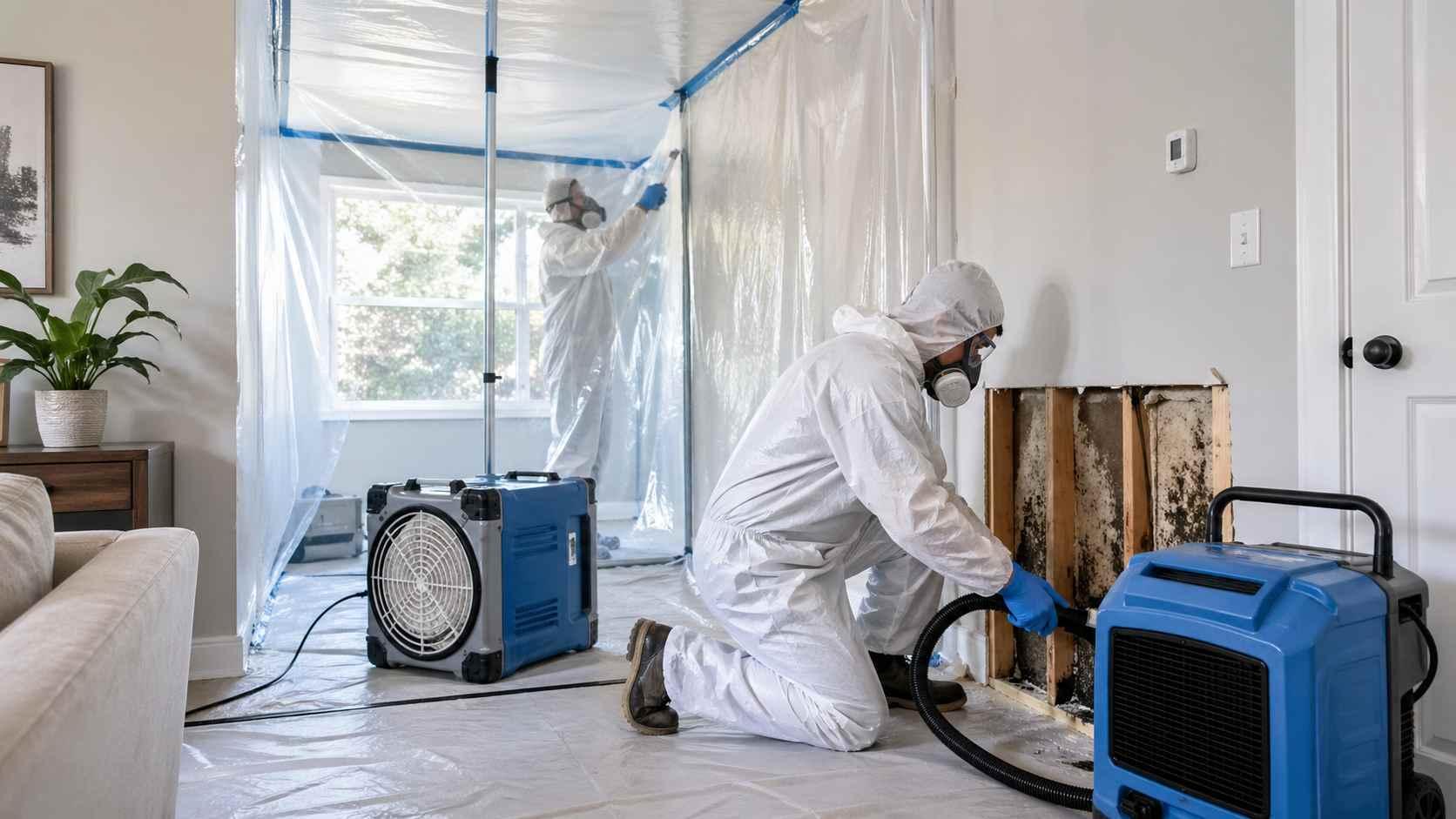 Illustrative image
Residential & Commercial Mould Removal
Controlled removal of mould-affected plasterboard, ceilings, insulation and fittings, planned around occupants, tenants and body corporate requirements.
Learn more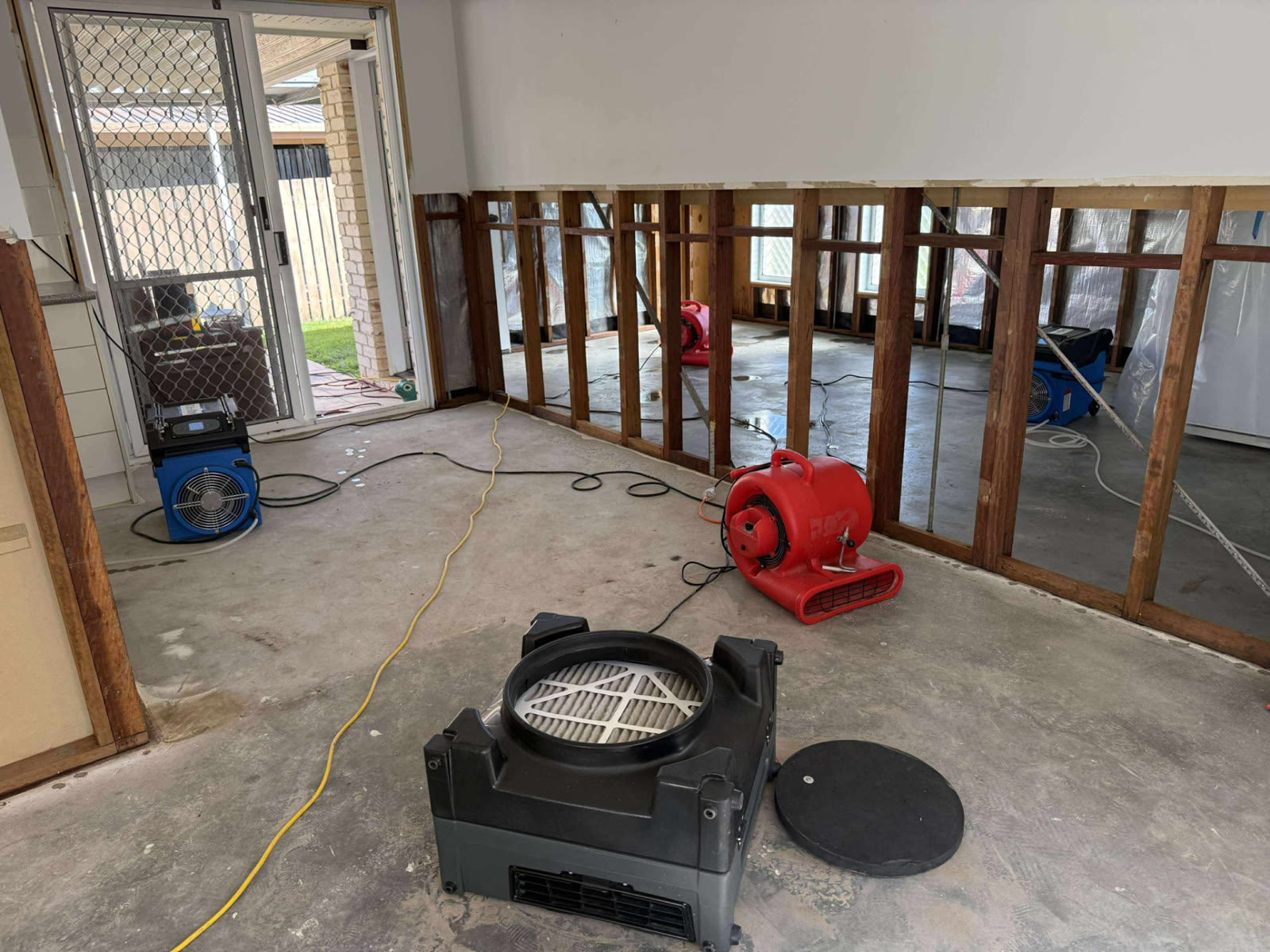
Containment & HEPA Air Filtration
Plastic barriers and HEPA air scrubbers to reduce the spread of spores beyond the work area. The containment plan depends on the property and scope.
Learn more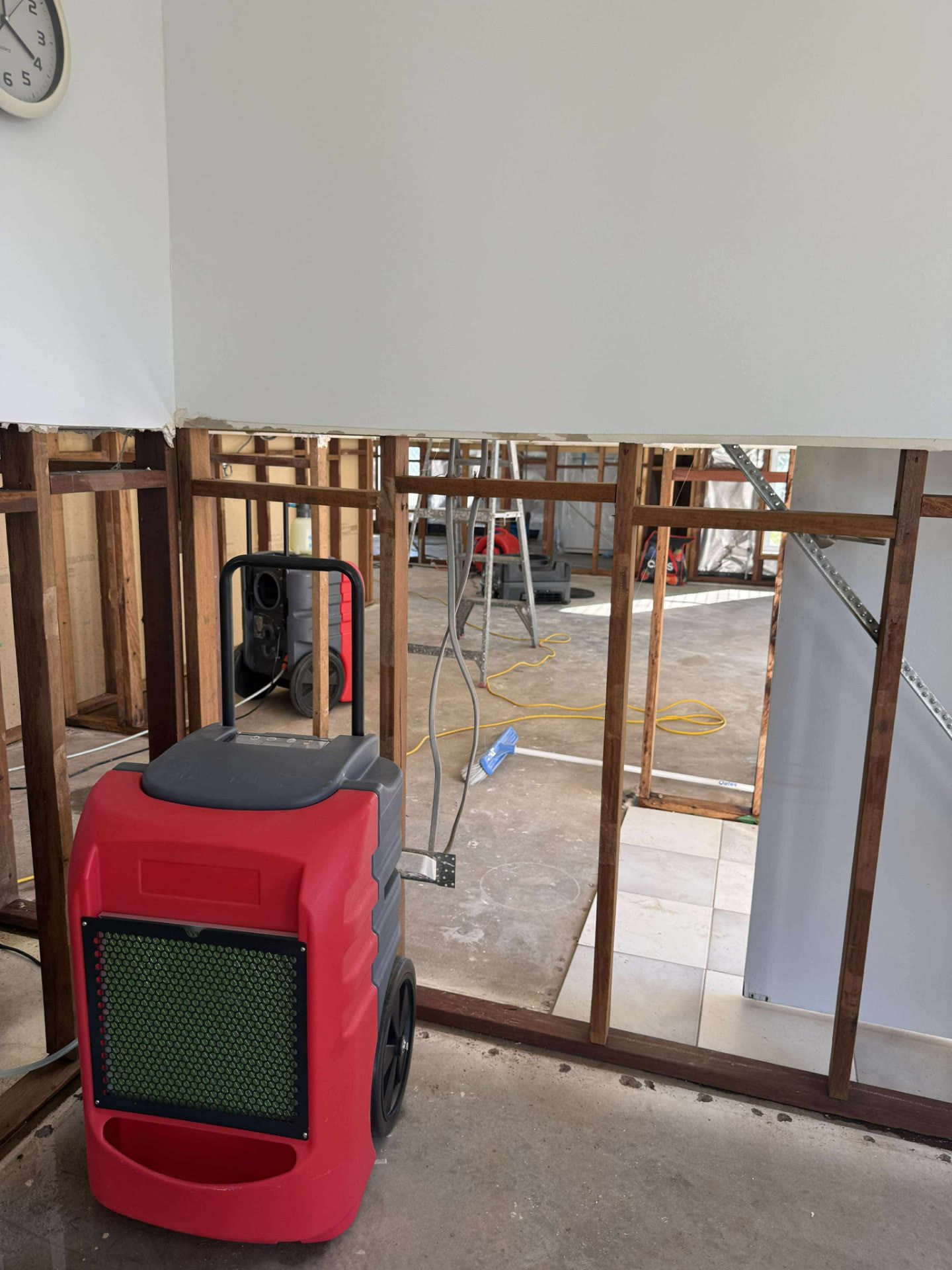
Water Damage & Structural Drying
Water damage restoration in Maudsland after roof leaks, plumbing leaks, storms or actual flooding, with structural drying monitored by moisture readings.
Learn moreFor leak-affected framing and ceilings, see our structural drying and moisture monitoring. We also support insurance and commercial remediation projects, with independent hygienist assessments and testing arranged where needed.
How we work
Our Mould Remediation Process
- 1
Inspection & Assessment
We talk through the history, take moisture readings and thermal images, and confirm what's feeding the mould.
- 2
Containment & Air Filtration
Where the scope needs it, we seal the work area and run HEPA air filtration to protect the rest of the property.
- 3
Remediation & Cleaning
Contaminated porous materials are removed and salvageable surfaces are HEPA-vacuumed and cleaned.
- 4
Drying, Verification & Recommendations
Structural drying, final moisture readings and a documented report with photos and advice to stop it returning.
Not every step is needed on every job — we explain the proposed scope before work begins. Independent clearance testing can be arranged where the scope, insurer or a hygienist requires it.
Why Choose The Mould Removers in Maudsland?
- Source first. We confirm the moisture source with readings and thermal imaging before we quote removal.
- Professional equipment. HEPA air scrubbers, commercial dehumidifiers, air movers and moisture meters on every job that needs them.
- Clear communication. You'll know the scope, what's being removed and why before work starts.
- Detailed reporting. Every job ends with a documented report — photos, moisture readings and a summary of the work.
- Homes and commercial premises. Houses, units, strata buildings, offices and workshops, including insurance and builder-managed jobs.
 Illustrative image
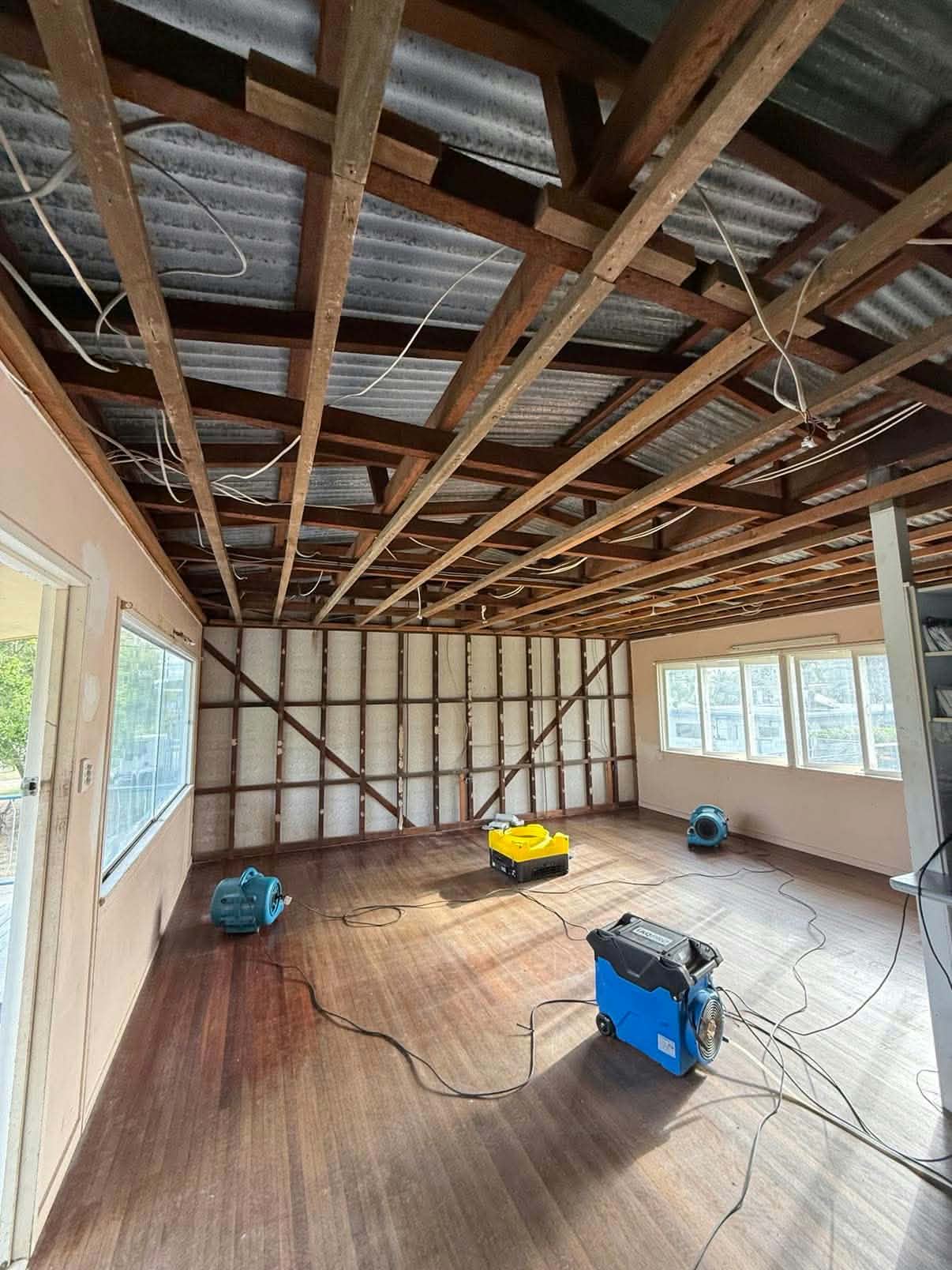
Addressing Moisture Challenges in Maudsland Environs
These are inspection considerations, not a diagnosis of every property. We assess likely contributing conditions on site and explain any limitations or further investigations needed.
Foothill Microclimates
Positioned beneath Tamborine Mountain, local properties regularly experience afternoon shade and damp valley breezes that slow natural building drying.
Modern Sealed Envelopes
Contemporary detached homes frequently lack cross-ventilation, causing ambient humidity to settle inside cupboards and sub-floor areas without adequate extraction.
Acreage Sub-Floor Moisture
Steeper blocks and overland surface run-off near Guanaba Creek can elevate moisture under elevated foundations and lower-ground garages.
Ducted AC Condensation
Heavy reliance on refrigerated cooling throughout humid summer months can generate ductwork condensation and moisture accumulation in ceiling voids.
Our work
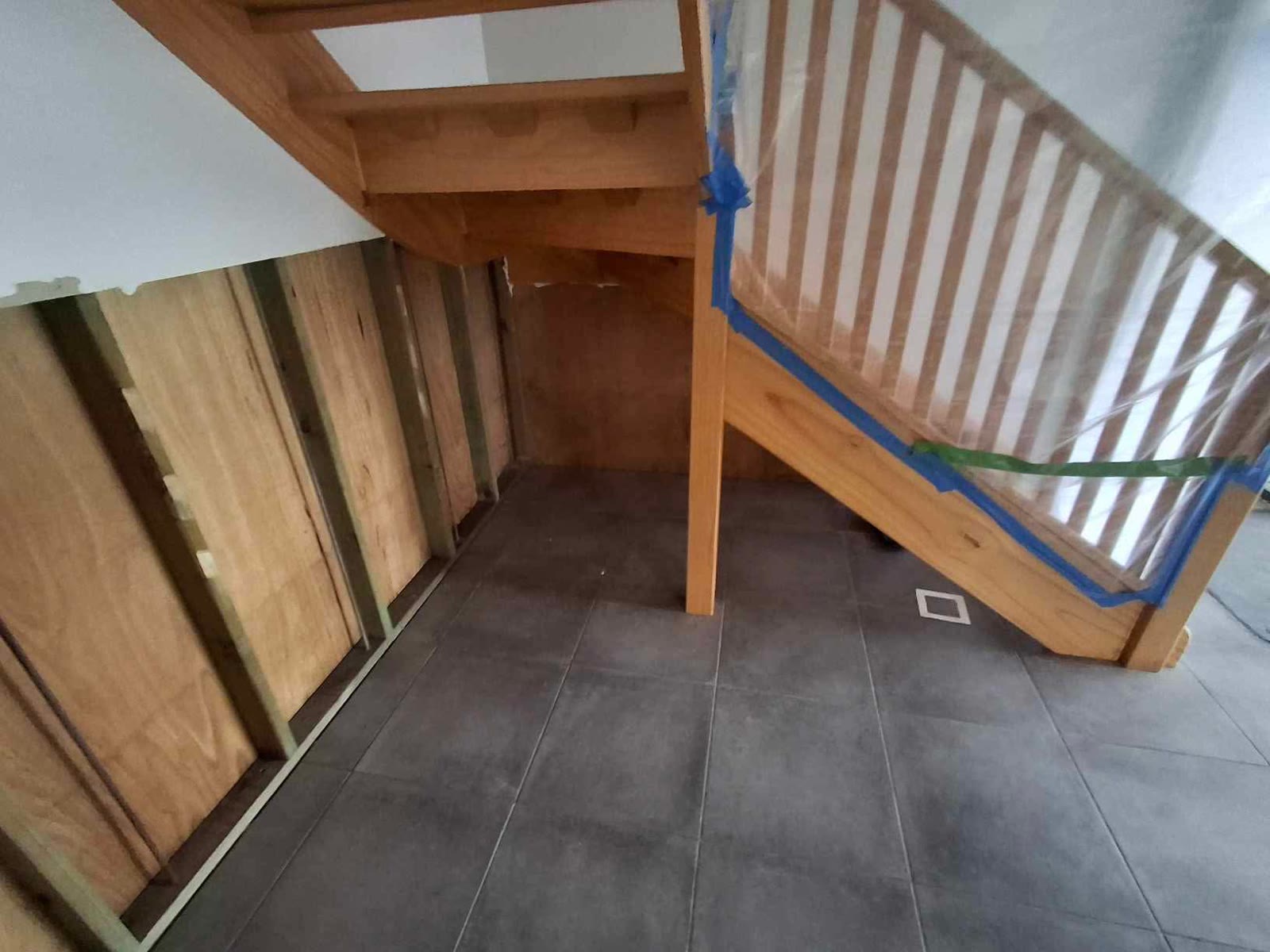
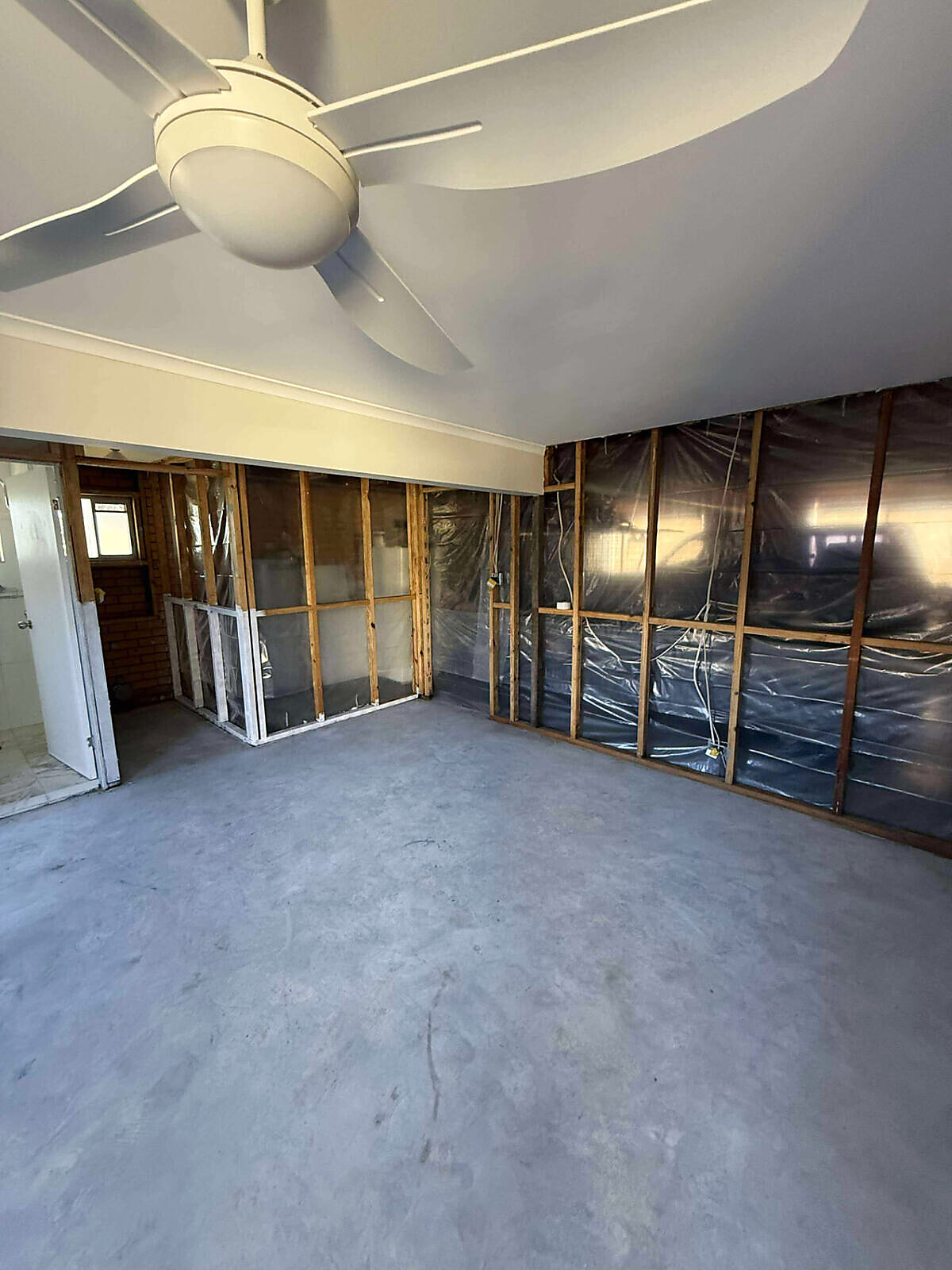
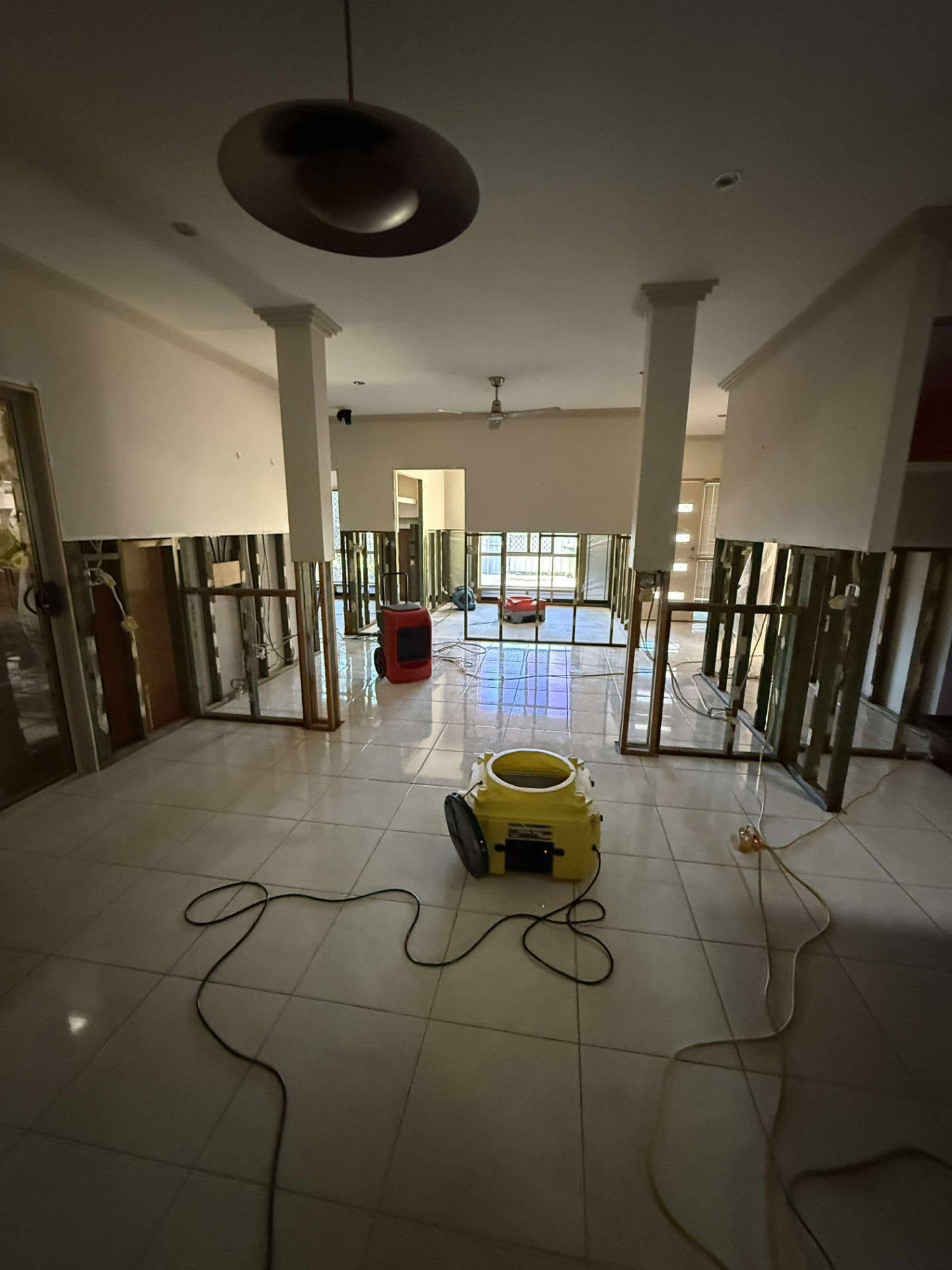
From our recent remediation jobs
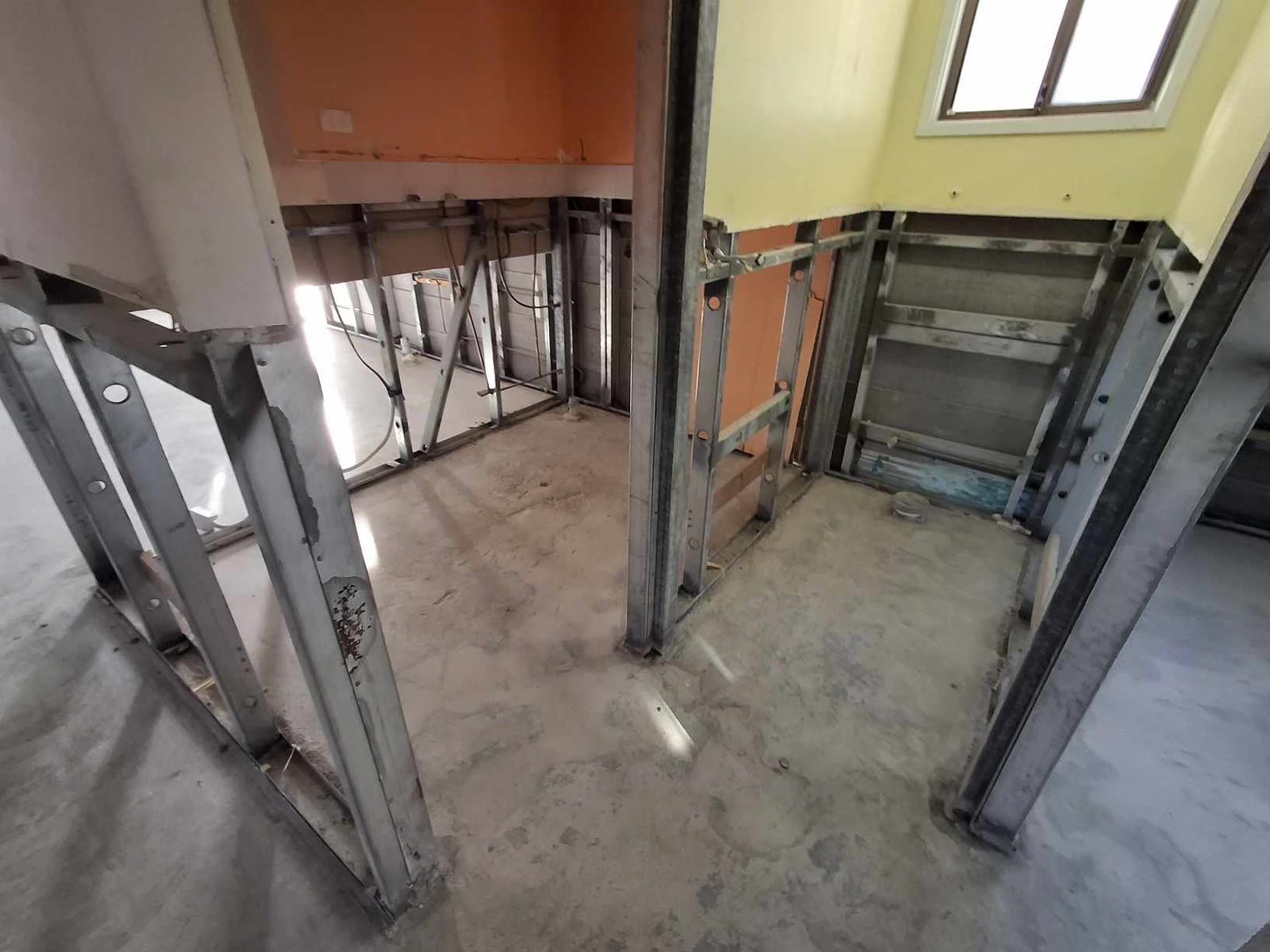
Request a mould inspection or quote
Tell us what you're seeing and upload a few photos. A team member reviews every enquiry and will get back to you.
- Don't scrub, sand or pull off mouldy plasterboard — it spreads spores.
- Take clear photos of the affected areas and upload them with the form.
- Note any recent leaks, storms or plumbing work.
- In a unit or tenancy, let your strata or property manager know if the source could be shared.
Mould removal in Maudsland — FAQs
Why does mould grow quickly in newer Maudsland homes?
Newer construction focuses on thermal efficiency and acoustic insulation, creating tight building envelopes. In Maudsland's humid river-valley setting, moisture produced from cooking, hot showers, and laundry can struggle to escape without dedicated mechanical extraction, leading to surface mould on ceilings and inside cupboards.
How do you handle water damage restoration after severe storms?
When storm run-off or sudden roof failures cause water entry, we extract standing water, deploy commercial air movers and LGR dehumidifiers to dry structural timbers and plasterboard, and verify dry standards using thermal imaging and moisture meters before providing a completion report.
Do you provide mould remediation for body corporate properties in the area?
Yes, we inspect and remediate body corporate common property and managed community schemes in Maudsland. We establish clear boundaries regarding whether moisture origins stem from common infrastructure or private lot maintenance and provide independent documentation for strata managers.
Does mould colour determine the toxicity or type of remediation needed?
No. Mould colour does not determine species, toxicity, or the risk posed to indoor air quality. Regardless of whether fungal growth appears black, green, or white, our IICRC-certified process removes the source, eliminates the colonies safely under containment, and corrects the moisture driver.
What do we get when the job is finished?
Every job ends with a documented report — photos, moisture readings and a summary of the work. Independent post-remediation verification can be arranged where the scope, insurer or a hygienist requires it.

Book Your Maudsland Mould Inspection Today
A professional inspection and a clear remediation plan from our Gold Coast team.
Photo: Kgbo, CC BY-SA 4.0