

Local mould remediation · Coes Creek
Professional Mould Removal Coes Creek
The Mould Removers provides IICRC-certified, QBCC-licensed mould remediation for Coes Creek homes and commercial premises. We investigate moisture, address affected materials and help you understand what needs fixing to reduce the risk of recurrence.
- QBCC Licence 15082064
- IICRC industry methods
- Homes, units & commercial
- Documented report every job
Photo: Jan Smith, CC BY 2.0
Mould remediation for Coes Creek’s leafy residential setting
Coes Creek sits inland beside Nambour, with a leafy, undulating residential setting rather than beachfront conditions. Detached homes, including brick houses and timber construction, can face different moisture problems depending on their age, drainage and ventilation. In raised homes, damp subfloor areas can affect rooms above; in slab homes, leaks and poorly drained external areas can contribute to moisture at floor level. The Sunshine Coast’s humid summers and heavy rain can slow drying, particularly around shaded buildings. Closed bedrooms, built-in wardrobes and bathrooms without effective extraction can also develop persistent condensation and mould, even when there has been no stormwater entry.
The Mould Removers provides residential and commercial mould remediation, including support for body corporate managers where shared buildings or common property are involved. We begin with an inspection and moisture investigation to assess affected areas and likely moisture sources, then explain the recommended scope before work proceeds. Where needed, independent hygienist testing can be arranged to help assess contamination or verify remediation outcomes. We also provide water damage restoration where actual water entry has occurred, with drying and remediation tailored to the affected materials. At job end, you receive a documented report recording the work completed, relevant findings and recommendations for addressing ongoing moisture risks.
Book a Mould Inspection
Common signs of mould
- Musty wardrobes in shaded bedrooms of detached homes.
- Mould beneath raised timber floors or around subfloor access.
- Swollen skirting or damp carpet edges in slab homes.
- Ceiling staining after heavy rain or a roof leak.
- Recurring bathroom mould despite regular surface cleaning.
- Musty smells around air-conditioning outlets in offices or shared buildings.
Our Mould Remediation Services in Coes Creek
 Illustrative image
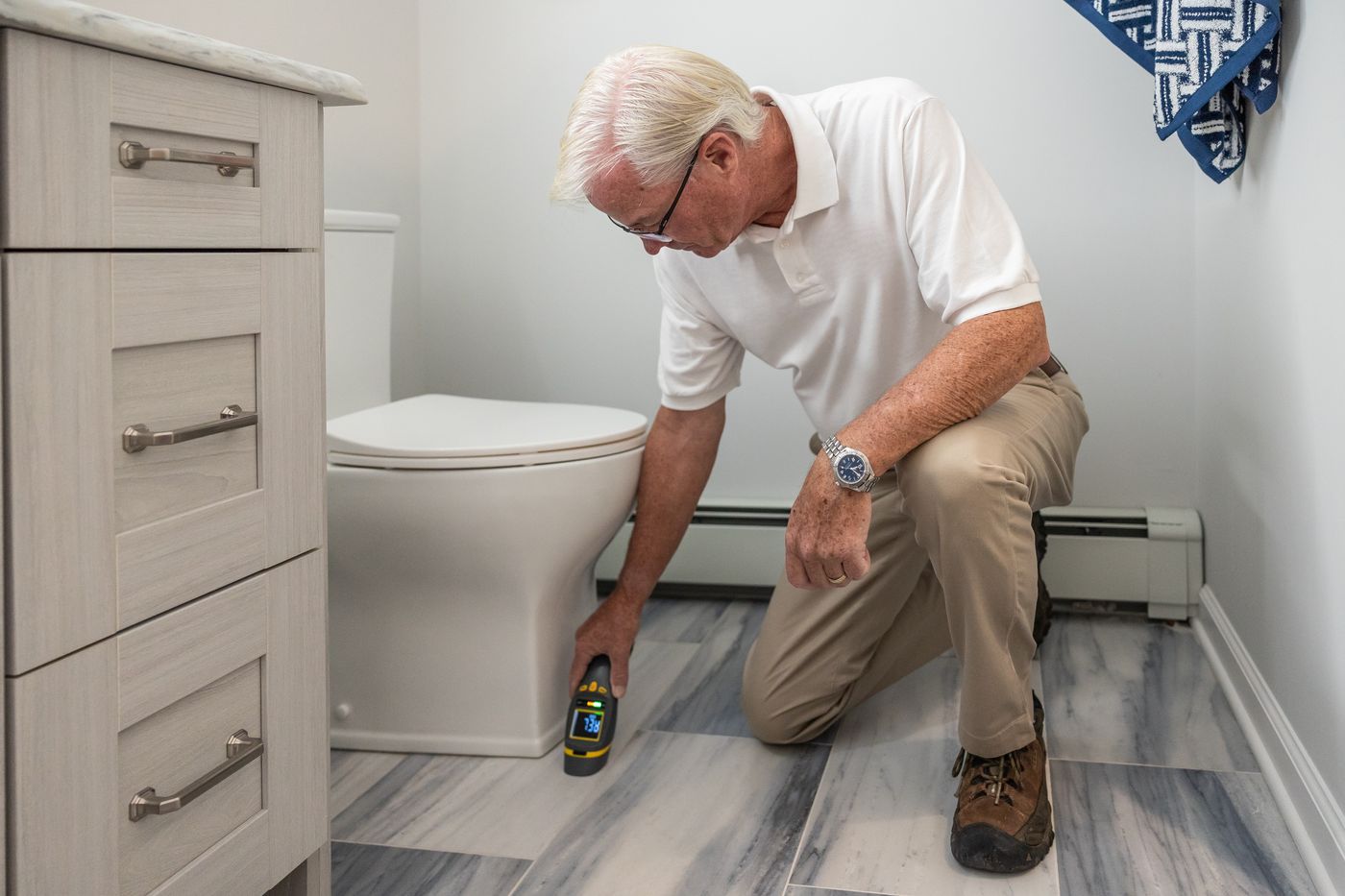
Mould Inspections & Moisture Investigations
Visual assessment, moisture readings and thermal imaging to find the water behind mould in Coes Creek homes, units and commercial premises. Sampling, where needed, is arranged with an independent hygienist.
Learn more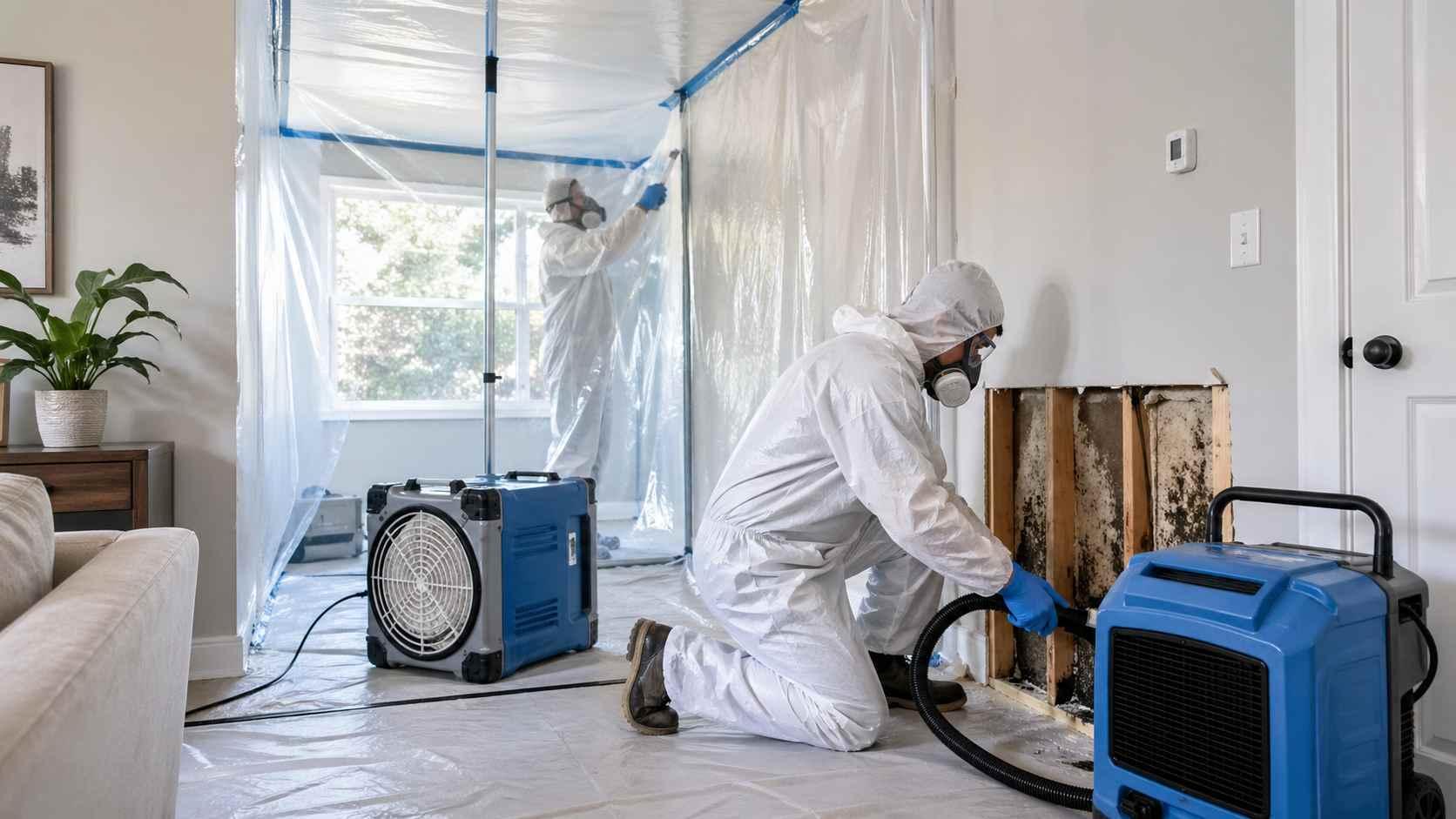 Illustrative image
Residential & Commercial Mould Removal
Controlled removal of mould-affected plasterboard, ceilings, insulation and fittings, planned around occupants, tenants and body corporate requirements.
Learn more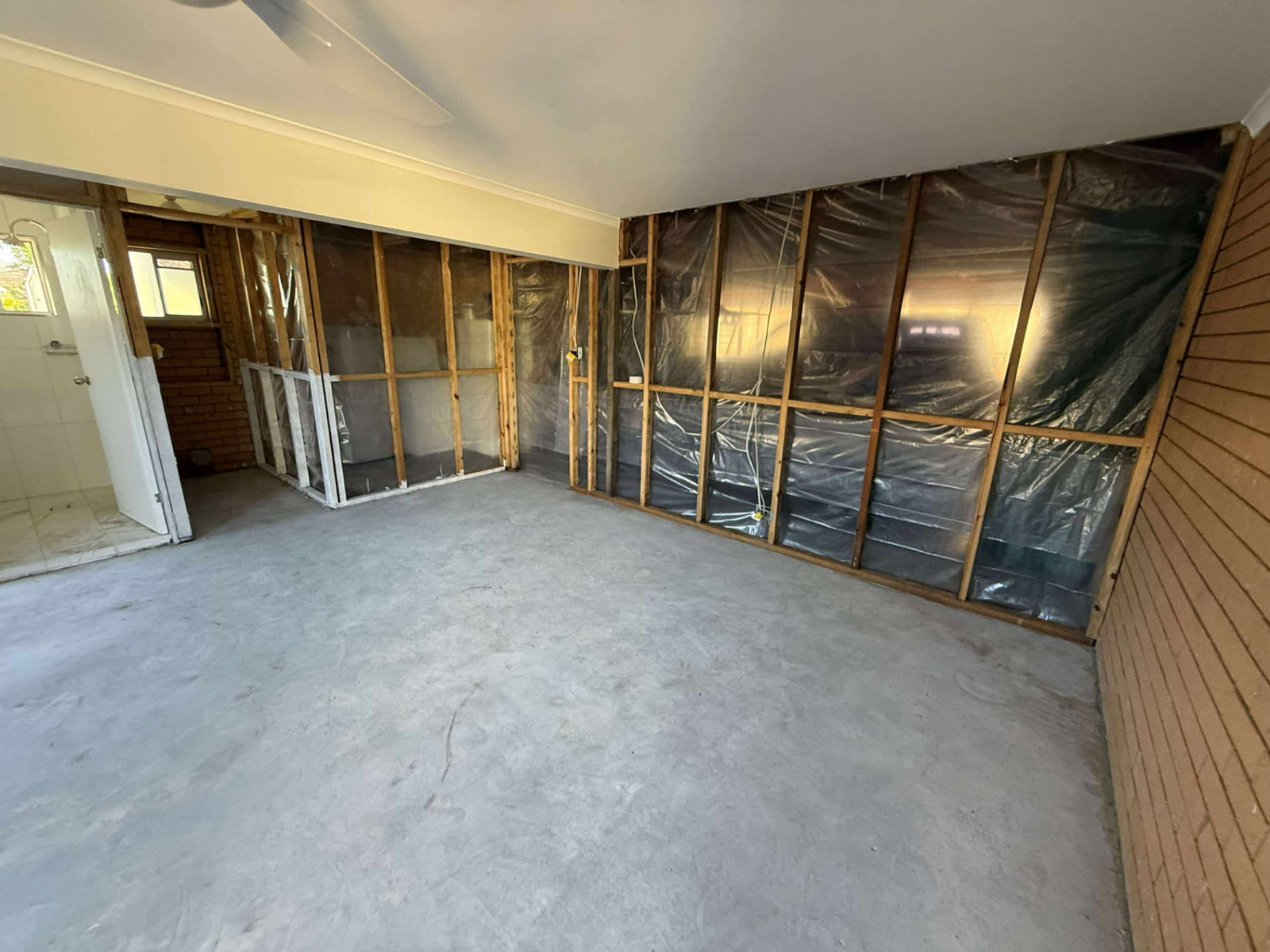
Containment & HEPA Air Filtration
Plastic barriers and HEPA air scrubbers to reduce the spread of spores beyond the work area. The containment plan depends on the property and scope.
Learn more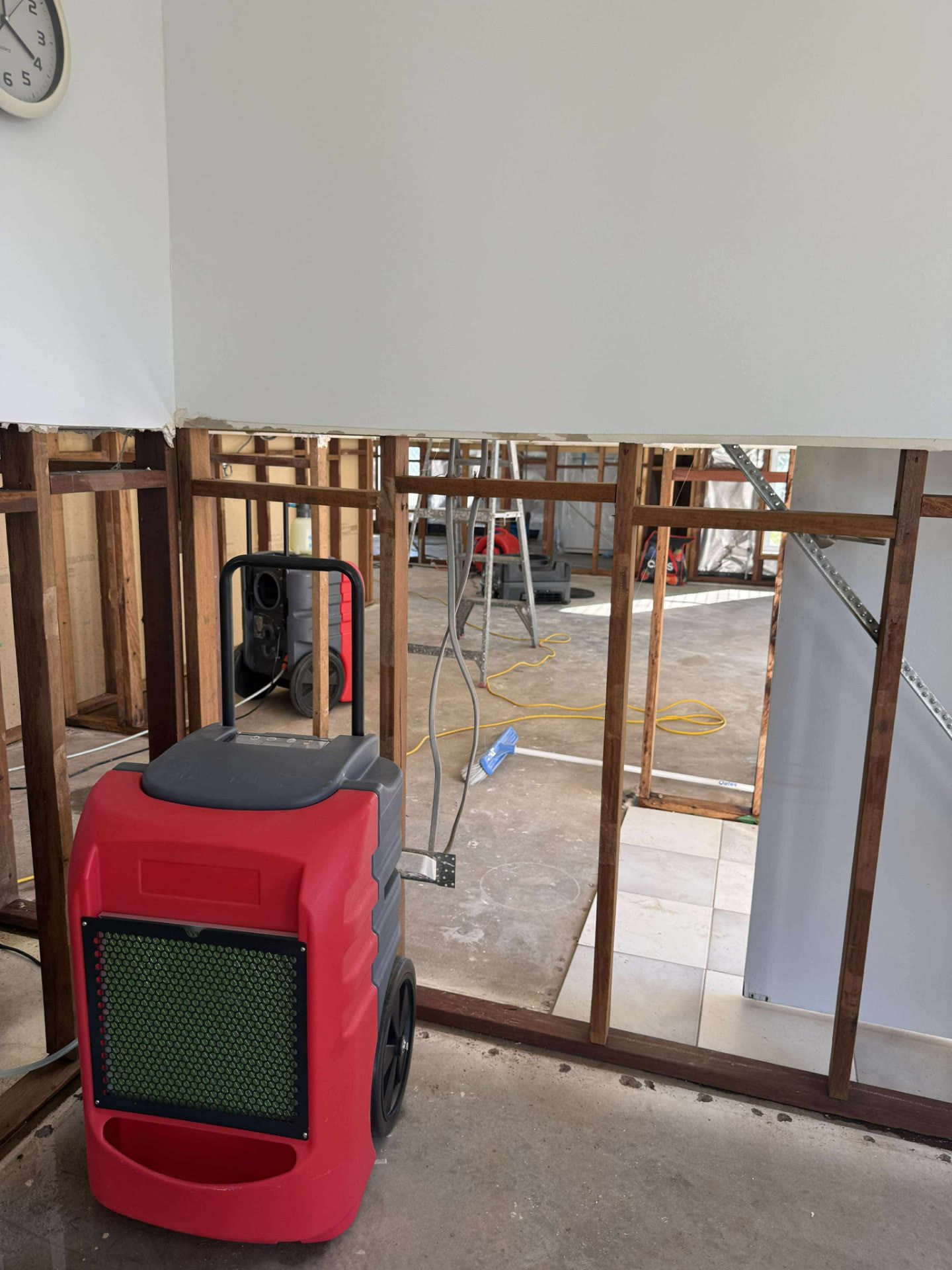
Water Damage & Structural Drying
Water damage restoration in Coes Creek after roof leaks, plumbing leaks, storms or actual flooding, with structural drying monitored by moisture readings.
Learn moreFor leak-affected framing and ceilings, see our structural drying and moisture monitoring. We also support insurance and commercial remediation projects, with independent hygienist assessments and testing arranged where needed.
How we work
Our Mould Remediation Process
- 1
Inspection & Assessment
We talk through the history, take moisture readings and thermal images, and confirm what's feeding the mould.
- 2
Containment & Air Filtration
Where the scope needs it, we seal the work area and run HEPA air filtration to protect the rest of the property.
- 3
Remediation & Cleaning
Contaminated porous materials are removed and salvageable surfaces are HEPA-vacuumed and cleaned.
- 4
Drying, Verification & Recommendations
Structural drying, final moisture readings and a documented report with photos and advice to stop it returning.
Not every step is needed on every job — we explain the proposed scope before work begins. Independent clearance testing can be arranged where the scope, insurer or a hygienist requires it.
Why Choose The Mould Removers in Coes Creek?
- Source first. We confirm the moisture source with readings and thermal imaging before we quote removal.
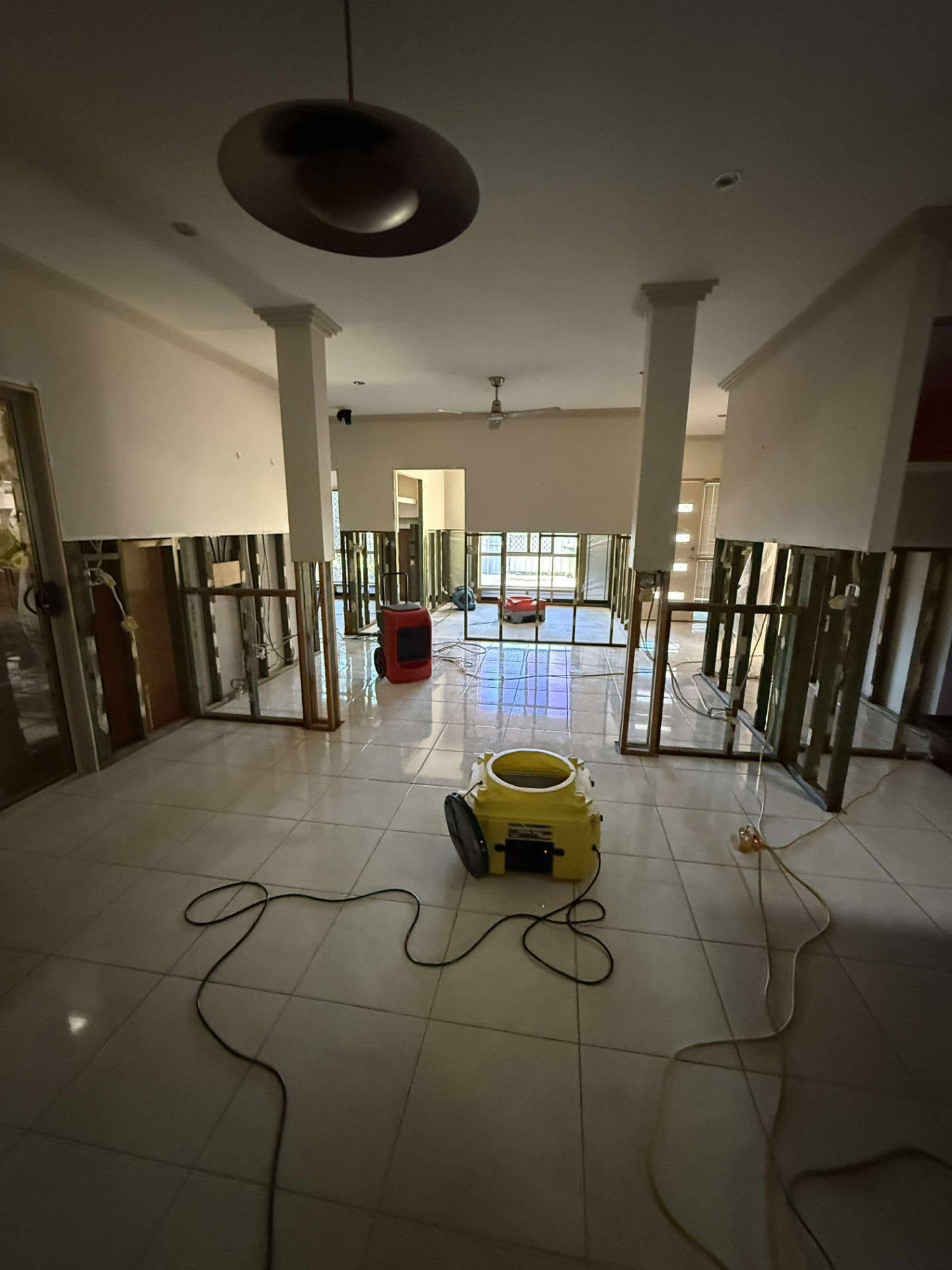
- Professional equipment. HEPA air scrubbers, commercial dehumidifiers, air movers and moisture meters on every job that needs them.
- Clear communication. You'll know the scope, what's being removed and why before work starts.
- Detailed reporting. Every job ends with a documented report — photos, moisture readings and a summary of the work.
- Homes and commercial premises. Houses, units, strata buildings, offices and workshops, including insurance and builder-managed jobs.
 Illustrative image
Local conditions that shape the remediation approach
These are inspection considerations, not a diagnosis of every property. We assess likely contributing conditions on site and explain any limitations or further investigations needed.
Leafy blocks and shaded rooms
Coes Creek’s established vegetation can leave parts of a home shaded for much of the day. Combined with humid weather and limited airflow, this can slow drying around external walls and inside closed rooms.
Different homes, different moisture pathways
Brick and timber homes need an approach suited to their construction. Where present, subfloors, enclosed lower levels and built-in storage deserve attention alongside visible mould on walls or ceilings.
Heavy rain and site drainage
On sloping blocks, roof drainage and the direction of surface runoff matter. Where actual water entry has occurred, water damage restoration can include moisture assessment, drying and treatment of affected areas.
Businesses and shared property
We assist commercial occupiers and, where relevant, body corporate managers with mould inspections and remediation. Access, affected rooms and any shared moisture source are considered when planning the work.
Our work
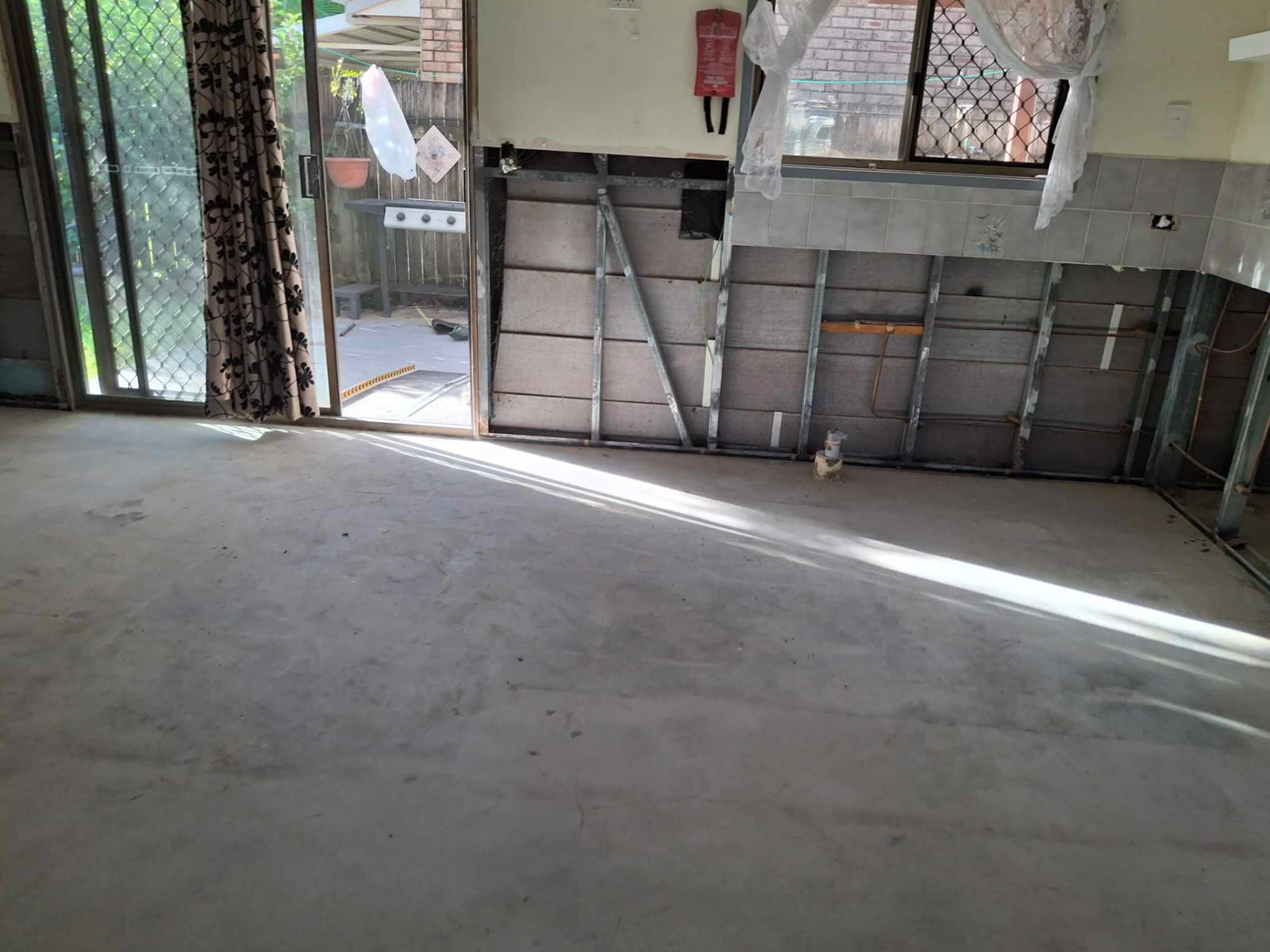
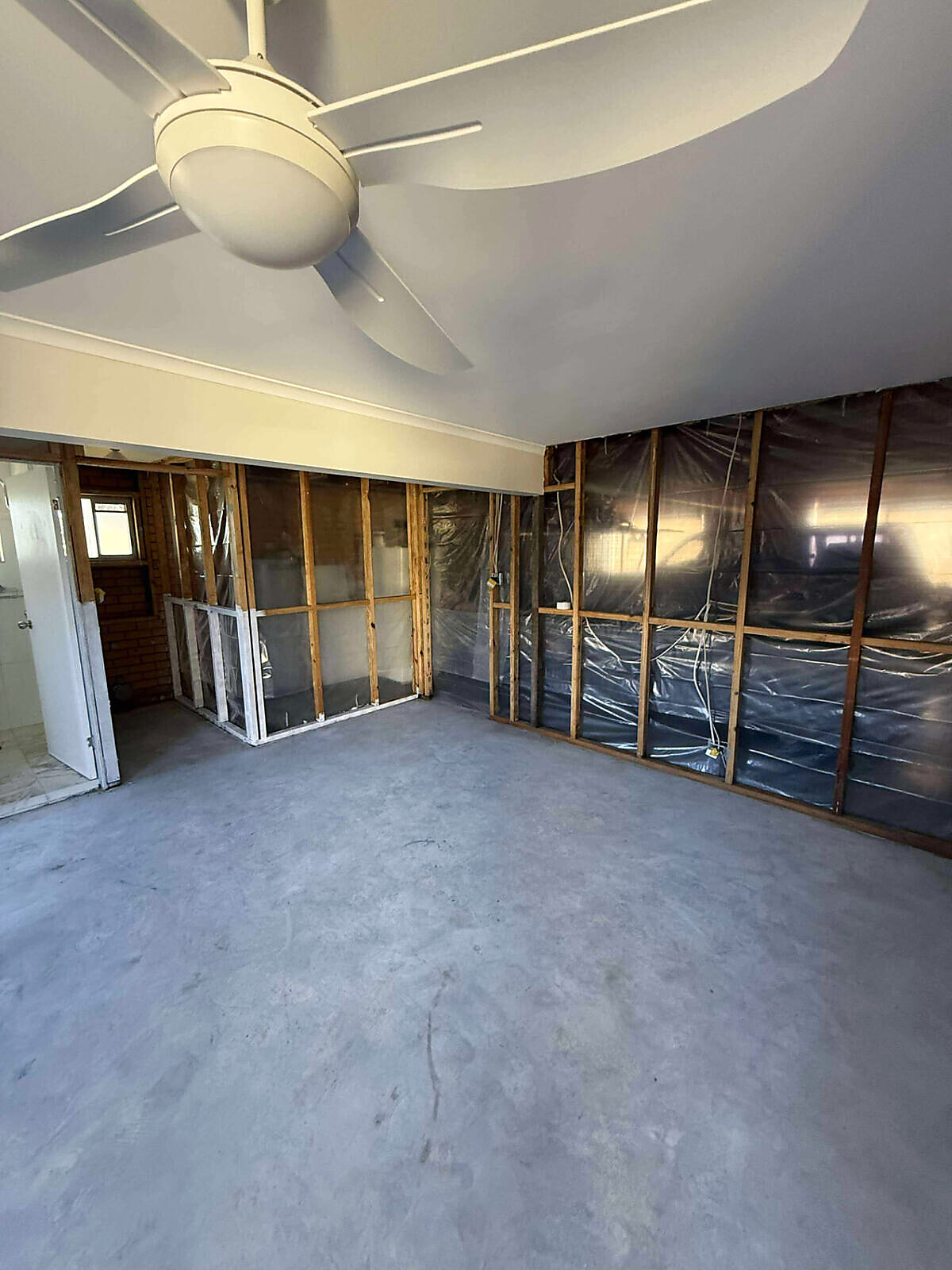
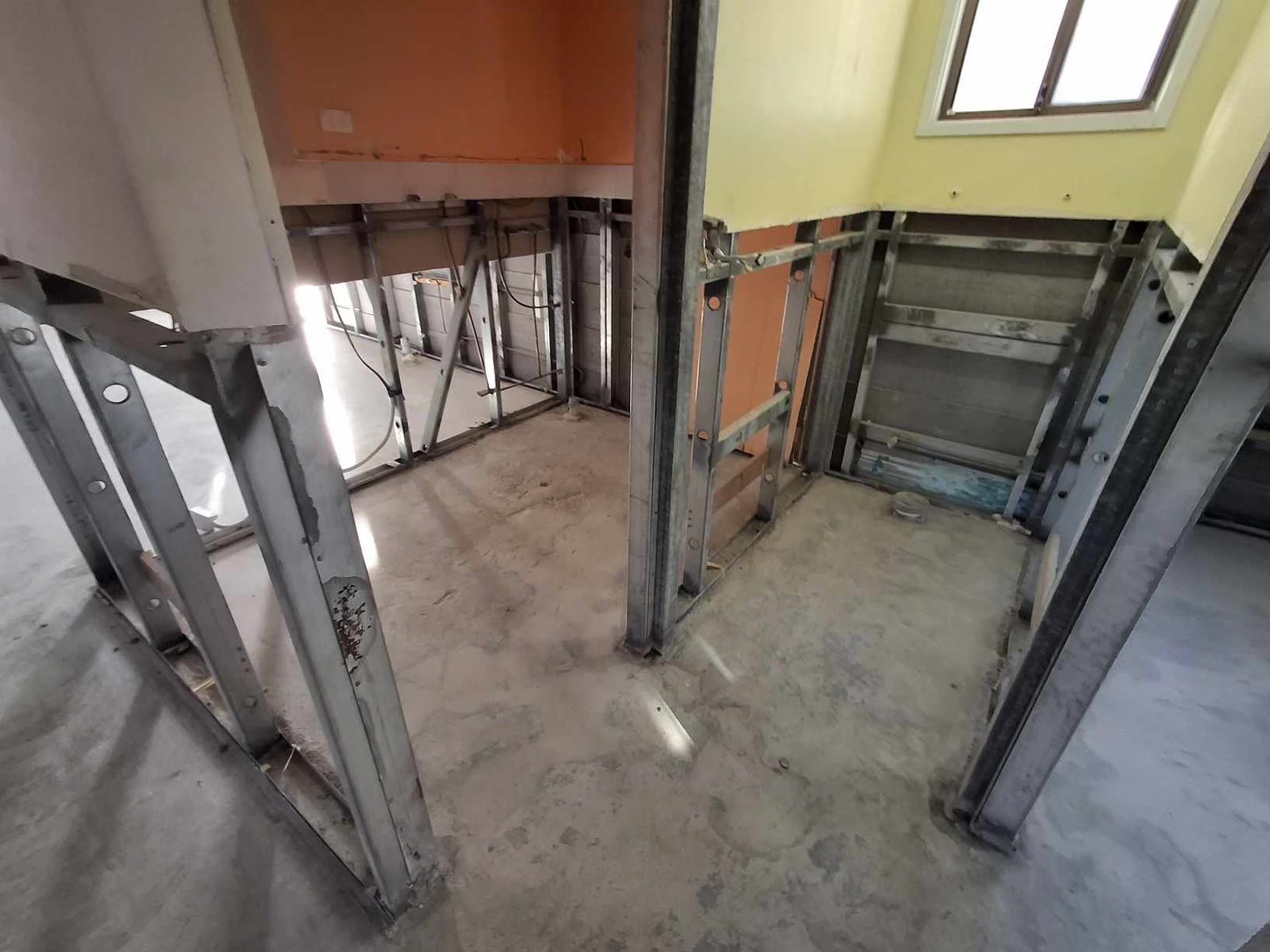
From our recent remediation jobs
Request a mould inspection or quote
Tell us what you're seeing and upload a few photos. A team member reviews every enquiry and will get back to you.
- Don't scrub, sand or pull off mouldy plasterboard — it spreads spores.
- Take clear photos of the affected areas and upload them with the form.
- Note any recent leaks, storms or plumbing work.
- In a unit or tenancy, let your strata or property manager know if the source could be shared.
Mould removal in Coes Creek — FAQs
Why does mould keep returning in my Coes Creek home?
In Coes Creek’s humid, leafy setting, recurring mould can be linked to condensation, limited ventilation, plumbing leaks or rain entering through building defects. Shaded bedrooms and packed wardrobes may stay damp longer, while raised homes can have moisture beneath the floor. Cleaning the visible growth does not resolve an ongoing moisture source. An inspection and moisture investigation helps distinguish these possibilities so remediation can be paired with suitable repairs, ventilation improvements or drainage advice.
Does a Coes Creek property need to flood before water damage restoration is necessary?
No. A leaking roof, burst pipe or overflowing appliance can wet building materials without any wider flooding. After heavy rain, some properties may also experience localised water entry, depending on drainage and building condition; this is not a problem affecting every home. Where actual water entry has occurred, we assess the affected materials and moisture levels, then recommend drying and any necessary mould remediation. Prompt assessment can help identify moisture hidden beneath flooring or behind linings.
Can you help with Coes Creek commercial premises and body corporate properties?
Yes. We provide mould remediation for commercial premises in Coes Creek and can work with body corporate managers where a property has shared areas or building elements. An inspection considers both the visible problem and possible sources, such as plumbing, roof leaks or air-conditioning condensation. We discuss access and the proposed work with the relevant contact before proceeding. If moisture appears to involve common property or adjoining spaces, we identify the need for further investigation rather than assuming responsibility for the source.
Will I need independent mould testing, and what documentation will I receive?
Not every Coes Creek mould problem requires laboratory testing. The need depends on the extent of the issue, hidden contamination concerns and any verification requirements for the property. We can arrange independent hygienist testing where needed, including assessment or post-remediation verification appropriate to the agreed scope. At job end, you receive a documented report covering the work completed, relevant findings and recommendations. Any hygienist results are separate from our job report, and we explain what testing has been arranged.
What do we get when the job is finished?
Every job ends with a documented report — photos, moisture readings and a summary of the work. Independent post-remediation verification can be arranged where the scope, insurer or a hygienist requires it.

Book a Coes Creek mould inspection — 0418 344 573
A professional inspection and a clear remediation plan from our Sunshine Coast team.
Photo: ASphericalBird, CC BY 4.0